The Summer the Family Piled Into the Station Wagon: What a Gallon of Gas Used to Buy You
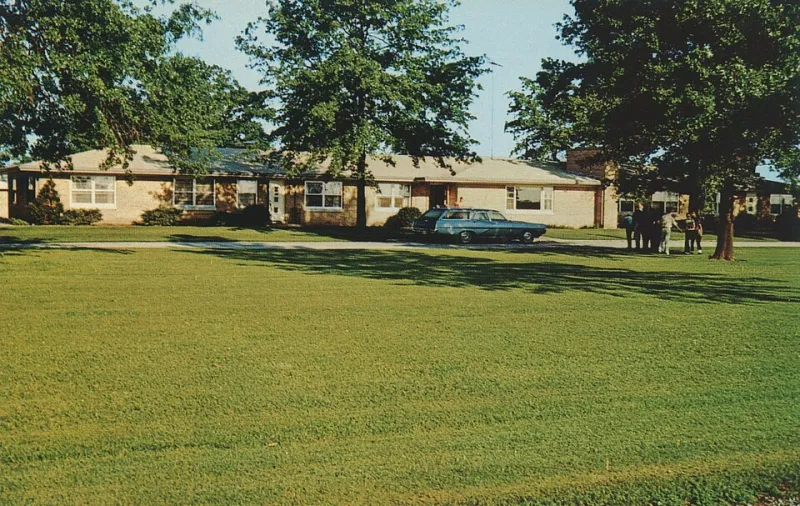
Photo: Steve Shook from Moscow, Idaho, USA, CC BY 2.0, via Wikimedia Commons
Picture a June morning in 1965. The station wagon is packed to the ceiling, the kids are fighting in the back seat, and Dad pulls into the Mobil station on the corner of Main Street. He hands the attendant two dollars and gets enough regular to get the family from Ohio to the Smoky Mountains and partway back.
It sounds like nostalgia, but the numbers behind that memory are genuinely startling — and they explain a lot about how America ended up looking the way it does.
Ten Minutes of Work, Four Gallons of Freedom
In 1965, gasoline averaged around 31 cents a gallon. The median manufacturing wage was roughly $2.75 an hour. Do the math and an hour of work bought almost nine gallons of gas.
Fast forward to today. A gallon of regular hovers around $3.20 in much of the country, and the median hourly wage sits near $28. That's also about nine gallons per hour of work.
So here's the twist most people never realize: adjusted for wages, gasoline costs roughly what it did in the mid-1960s. Sometimes a bit more, sometimes a bit less, depending on the decade you pick. The 1970s oil shocks, not today, were the real pain point — by 1980, that same hour of labor bought barely four gallons.
The price at the pump hasn't betrayed us. Our perception has.
The $200 Vacation vs. the $900 One
Take a typical 1968 family road trip: two weeks, from Kansas City to Yellowstone and back, about 2,600 miles in a big V8 that got maybe 12 miles to the gallon. That's roughly 215 gallons — call it 65 dollars at the pump. Motels ran $10 to $12 a night. The whole vacation, food included, could be done for about $250.
Today's version of that trip: same route, same two weeks, a crossover SUV getting 28 mpg. Fuel for 2,600 miles comes to around $300. Motels in the national park gateway towns? $180 a night, easy. The trip lands somewhere north of $3,000.
Gas went from being the cheap part of the trip to being one of the only cheap parts. But look again at the wage math: in 1968, that $250 vacation cost the median worker about 170 hours of labor. Today's $3,000 trip costs about 110 hours. By the measure that actually matters — how long you have to work to take your family to Yellowstone — vacations are cheaper than they've ever been. We just don't feel it that way, because the fuel receipt is the part we see.
Cheap Gas Built the Map You Live On
Fuel prices didn't just fund vacations. They quietly drew the map of modern America.
When gas was effectively free by the hour-of-work measure, it made sense to buy a house 25 miles from the office. It made sense for a subdivision to have no sidewalk, because you'd never walk anywhere anyway. It made sense for the grocery store, the school, and the dentist to be three separate drives. The postwar suburbs weren't just an architectural preference — they were a fuel-price bet, and for fifty years, that bet paid off.
You can even see it in where Americans moved. The Sunbelt boom of the 1970s and '80s coincided with the worst gas prices in history, but it was air conditioning and jobs pulling people south. The recent migration back toward walkable city neighborhoods, meanwhile, tracks neatly with the era when people started actually noticing the pump number climbing past $50 a fill-up.
The Number That Stopped Mattering
Here's maybe the strangest change of all: the price of gas used to be a national obsession. In the 1970s, gas lines made the evening news, presidents gave addresses about it, and speed limits were cut to 55 mph to save fuel. Today, prices swing just as wildly in percentage terms, and most of us glance at the total and tap our card.
Part of that is that gas is a smaller slice of the average household budget than it was in 1980, when it approached 6 percent. Part of it is that we've simply stopped measuring fuel in the units that made it feel real — hours of work, dollars per week, miles per paycheck.
So the next time you wince at the pump, try the old math. Divide your hourly wage by the price per gallon. You're buying more freedom per hour of labor than your grandparents did, even if the total on the screen looks bigger than anything they ever imagined.
The tank costs more. The drive costs less. We just changed which number we watch.