Fifty Words to Describe Your Whole Heart: The Lost Art of the Personal Ad
Imagine you're single in 1987. You live in Chicago. You're thirty-two years old, you have a sense of humor, you like hiking and jazz, and you'd genuinely like to meet someone.
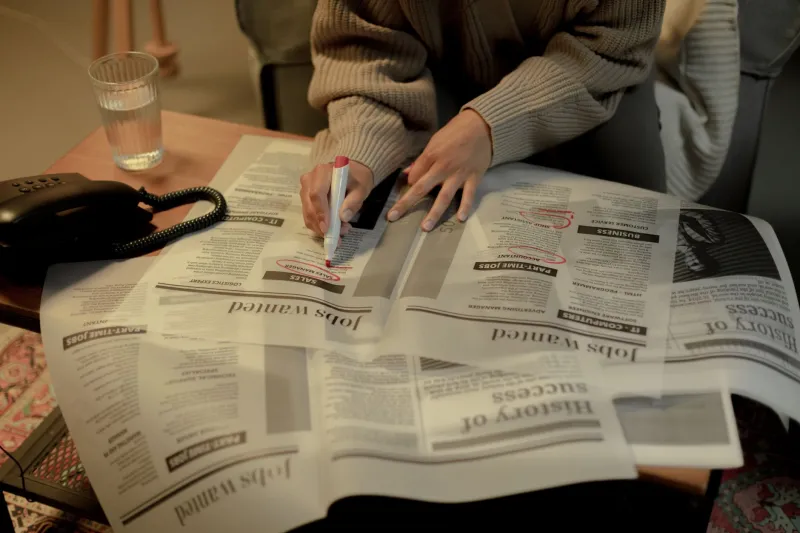
You have options, but they're limited. There are bars, obviously. There are setups through friends and coworkers. There are chance encounters. And then, if you're willing to feel slightly exposed about it, there's the back section of the Chicago Reader — the alternative weekly — where, tucked between concert listings and apartment rentals, the personal ads run in small dense columns every week.
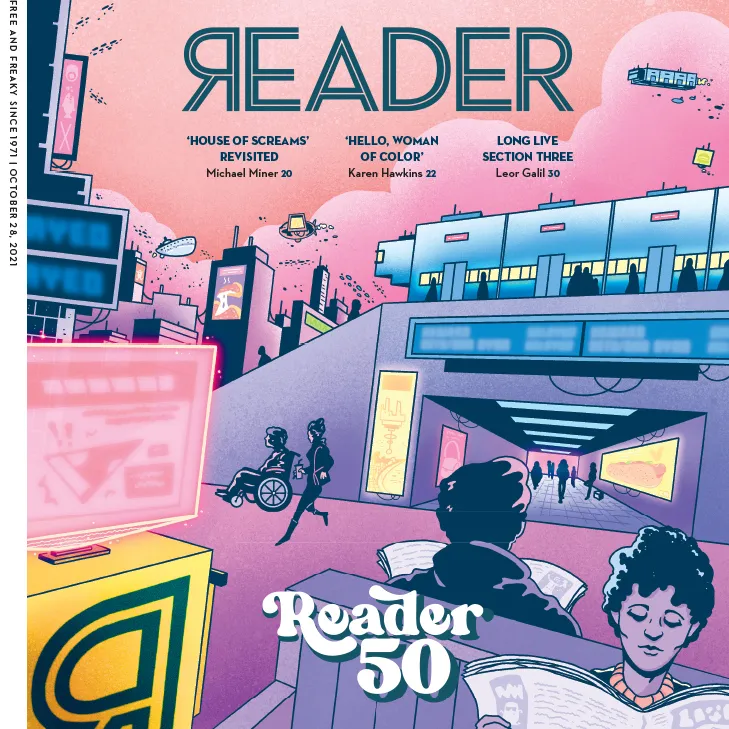 Photo: Chicago Reader, via chicagoreader.com
You sit down. You try to describe yourself in fifty words. You think about what to include and what to leave out. You submit it, pay a small fee, and then you wait.
This is how a significant number of Americans once looked for love.
The Courage Required to Place an Ad
Personal ads in American newspapers go back further than most people realize — at least to the mid-1800s, when publications in major cities began running columns for people seeking marriage or companionship. For most of their history, they carried a faint stigma. Placing one implied that you'd exhausted more conventional social routes. It suggested a certain aloneness that polite society didn't always know what to do with.
By the 1970s and 1980s, that stigma had softened considerably, particularly in urban areas and in the alternative press. Publications like the Village Voice in New York, the Boston Phoenix, and the LA Weekly ran personal sections that became genuine community institutions. The Chicago Reader's personals were legendary — funny, honest, occasionally heartbreaking, and read by far more people than ever placed an ad.
 Photo: Village Voice, via village-voice.com.au
Readers browsed them recreationally. Some people clipped favorites. The ads had a literary quality that emerged from pure constraint: when you have fifty words to describe yourself, every word does real work.
"SWF, 34, attorney, tired of working late and coming home to a quiet apartment. Likes cooking, terrible action movies, and long conversations about nothing in particular. Seeks SM, 30-45, who reads actual books."
That's a person. You can feel them through the words. You know something true about them in four sentences.
A World Without Photographs
Here's the detail that most dramatically separates the personal ad era from anything that exists today: there were no pictures.
None. You received a physical description — height, build, hair color, sometimes age — and that was it. The entire visual dimension of attraction, which modern dating apps have made the absolute centerpiece of the experience, was simply absent. You couldn't scroll through someone's Instagram. You couldn't see how they looked at a party or what their apartment said about them. You had words, and you had whatever those words made you feel.
This changed the filtering process completely. You were, whether you intended to be or not, evaluating someone's personality, humor, self-awareness, and intelligence before you ever knew what they looked like. The things that are hardest to fake in writing — warmth, wit, a specific and genuine way of seeing the world — were the primary data points.
People who responded to ads often said they found themselves drawn to something in the writing that they couldn't quite name. A turn of phrase. A specific detail that felt honest rather than performed. The absence of photographs forced a different kind of attention.
The Waiting, and What It Did to You
Once you responded to an ad — typically by writing a letter to a box number at the newspaper, which would forward it to the advertiser — you waited. There was no other option.
A week might pass. Two weeks. You'd think about the letter you sent and wonder if it had landed right, if the tone was off, if you'd come across as too eager or not eager enough. The advertiser was going through responses at their own pace, in their own time, with no obligation to reply quickly or at all. If they were interested, they'd write back. If not, silence.
This waiting had a quality that's genuinely hard to describe to anyone who's grown up with instant digital communication. It was uncomfortable, sometimes. It was also, in a strange way, clarifying. You'd written something honest and sent it out into uncertainty, and now the outcome was entirely out of your hands. That enforced patience shaped the emotional texture of the whole experience.
When a letter did arrive — a real letter, handwritten or typed, from someone you'd never met — it meant something specific. That person had taken time. They'd sat down and composed something. You learned about them from how they wrote, what they chose to share, whether they were funny or formal or nervous. Handwriting alone communicated things that a text message simply cannot.
First meetings, when they happened, were genuine unknowns. You knew the voice but not the face. The conversation, if it went well, was building on something already established — a written rapport, a sense of someone's mind — rather than starting from zero in a bar.
What We Traded Away
Modern dating apps have made the search for companionship faster, wider, and in many ways more efficient. Tinder launched in 2012 and fundamentally restructured how Americans meet. Today, roughly 30% of U.S. adults say they've used a dating app or site, and a growing share of relationships — including marriages — begin online.
The tools are remarkable. You can filter by location, age, interests, and values. You can see dozens of photos before exchanging a single word. You can match with someone at 11 p.m. and have a conversation going by midnight.
What's harder to measure is what got left behind. The personal ad demanded a kind of self-reflection — who am I, really, in fifty words? — that a photo profile doesn't require. The letter-writing process asked both parties to be present and deliberate in a way that rapid-fire messaging doesn't. The waiting, uncomfortable as it was, gave the whole thing a weight that swiping doesn't carry.
None of this is an argument for going back. It's just worth noticing that the old way wasn't only slower. It was different in kind — built around language and patience and a certain brave uncertainty that the personal ad, for all its awkwardness, somehow honored.