
The Leap of Faith That Was Every Family Vacation
You're planning a family trip to Orlando in 1988. Your weapon of choice? A three-paragraph description in a AAA guidebook and a travel agent named Margaret who swears the hotel is "really nice" and "close to everything." The single photo in the brochure shows a swimming pool that could have been taken during the Carter administration. You hand over your credit card and hope for the best.
This scenario — unthinkable to modern travelers — was how millions of Americans planned their vacations for decades. Before the internet democratized travel information, booking a trip anywhere beyond your hometown required a level of trust and optimism that would make today's review-obsessed travelers break into a cold sweat.
When Travel Agents Were the Gatekeepers of Everything
In the pre-internet era, travel agents wielded enormous power over American vacation plans. These professionals had access to reservation systems and industry contacts that ordinary travelers couldn't reach. You'd sit in their office, surrounded by promotional posters of exotic destinations, while they made mysterious phone calls and consulted thick reference books.
"I have something perfect for you," Margaret would announce, describing a resort that sounded like paradise. The catch? You had virtually no way to verify her claims. Travel agents worked on commission from hotels and airlines, creating incentives that didn't always align with traveler satisfaction. A resort might be paying higher commissions that week, suddenly making it the "perfect" choice for every client.
The information asymmetry was staggering. Travel agents had access to industry publications, supplier relationships, and booking systems, while travelers had guidebooks that might be years out of date and brochures that showcased properties at their absolute best. Consumer protection was minimal — if your "oceanview room" turned out to face a parking lot, your recourse was limited to stern words with Margaret upon your return.
The Guidebook Gamble
For independent travelers who bypassed agents, guidebooks became sacred texts. Frommer's, Fodor's, and AAA guides offered brief descriptions of hotels, restaurants, and attractions, but these snapshots captured a single moment in time. A restaurant praised in this year's guide might have changed ownership six months ago. A hotel described as "recently renovated" might have completed that renovation in 1982.
The most adventurous travelers relied on word-of-mouth recommendations from friends and colleagues. "My cousin stayed at this place in Cancun and loved it" became the basis for thousand-dollar vacation investments. These personal referrals were often the most reliable information available, but they came with obvious limitations — your cousin's definition of "clean" might differ dramatically from yours.
The Photography That Told Lies
Hotel and resort photography in the pre-digital era was an art form of creative deception. Professional photographers armed with wide-angle lenses could make a shoebox-sized room appear spacious. Careful lighting and strategic angles transformed mediocre properties into apparent luxury destinations.
Brochures featured photos that were technically accurate but practically misleading. That beautiful beach shot? Taken during the one hour of the day when the tide was perfect and the seaweed had been cleared. The elegant dining room? Photographed before it became a breakfast buffet area with fluorescent lighting.
Travelers had no way to see multiple perspectives of their destination. Today's hotel listings feature dozens of photos from every angle, including guest-submitted images that reveal properties in harsh daylight and unflattering conditions. The contrast is remarkable — modern travelers can virtually tour their hotel room before booking, while their predecessors crossed their fingers and hoped for the best.
When Disappointment Was Part of the Experience
The information gap created a travel culture where disappointment was almost expected. Families would arrive at their destination prepared for the possibility that their hotel might not match the brochure description. This wasn't necessarily pessimism — it was pragmatic acceptance of the system's limitations.
Travel disasters that would trigger immediate refund demands today were often shrugged off as "part of the adventure." A hotel room with a view of the dumpster instead of the ocean became a family story rather than grounds for a one-star review. Travelers developed resilience and adaptability that modern vacationers rarely need.
Restaurant selection was particularly challenging in unfamiliar cities. Without review platforms or photo menus, choosing where to eat often came down to observing local crowds or trusting recommendations from hotel concierges who might have their own financial incentives.
The Information Revolution That Changed Everything
Today's travel planning process would seem supernatural to 1980s vacationers. Modern travelers can virtually walk through their hotel lobby using Google Street View, read thousands of reviews from verified guests, and browse photos taken by previous visitors just last week. Restaurant menus, complete with photos and pricing, are available online before you leave home.
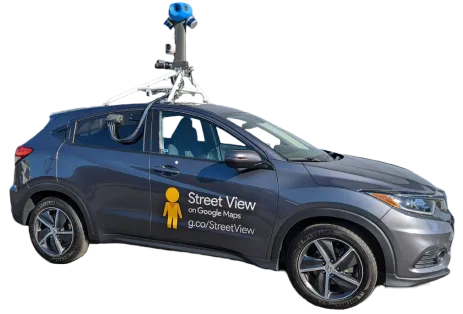 Photo: Google Street View, via kstatic.googleusercontent.com
Review platforms like TripAdvisor and Yelp democratized travel information, shifting power from industry gatekeepers to fellow travelers. The wisdom of crowds replaced the authority of travel agents, creating a more transparent but infinitely more complex decision-making environment.
Booking sites now offer detailed property descriptions, amenities lists, and cancellation policies that were never available through traditional travel agents. Price comparison tools ensure travelers see multiple options simultaneously, rather than trusting a single agent's recommendation.
What We Lost in the Translation
The efficiency gains are obvious, but something intangible disappeared when travel planning became a data-driven exercise. The old system, despite its flaws, preserved an element of mystery and discovery that many modern travelers miss. Arriving at a destination without exhaustive prior research allowed for genuine surprises — both pleasant and unpleasant.
The human element also vanished. Experienced travel agents, despite their biases, often provided valuable insights about destinations that no algorithm can replicate. They understood their clients' preferences and could suggest alternatives that might not appear in online searches.
Today's information overload creates its own problems. Paralyzed by endless options and conflicting reviews, some travelers spend more time researching their trips than actually taking them. The abundance of information that solved the old system's problems has created new forms of decision fatigue.
Still, few travelers would choose to return to the days of booking vacations based on Margaret's word and a single blurry photograph. The transformation from travel faith to travel science represents one of the internet age's most dramatic improvements to daily life — even if it eliminated some of the romance from the journey.