A Man's Word Used to Be Worth More Than a Signed Contract. Then Lawyers Happened.
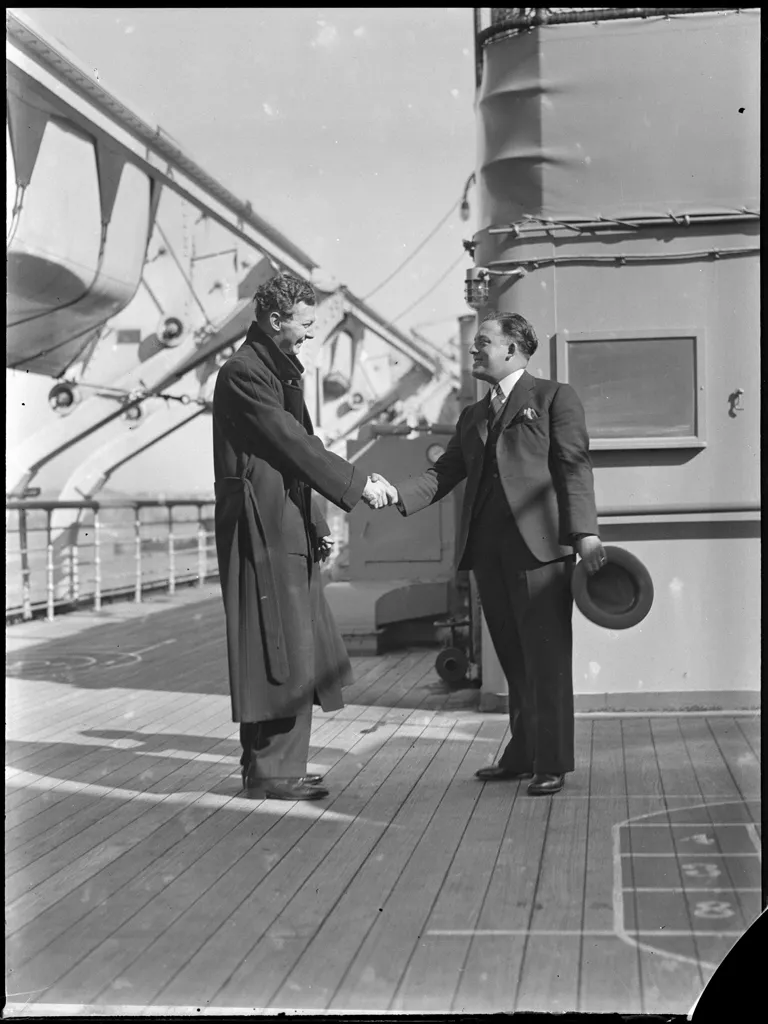
Photo: Tom Lennon Collection, Public domain, via Wikimedia Commons
A Man's Word Used to Be Worth More Than a Signed Contract. Then Lawyers Happened.
Somewhere in a drawer in your grandparents' house, there probably wasn't a folder full of contracts. No service agreements, no arbitration clauses, no three-page indemnification forms for a backyard fence installation. There was maybe a receipt, handwritten on a notepad, and the understanding that the person who gave it to you would stand behind it — because their name was on the line in a community where everyone knew everyone else.
That world didn't disappear overnight. But it's gone now, and most of us have forgotten just how differently Americans once moved through everyday transactions.
The Economy That Ran on Reputation
For much of the 20th century, especially in smaller cities and rural communities, personal reputation was the only credit score that mattered. A contractor who built your neighbor's garage and did a lousy job didn't need a Yelp review to suffer the consequences — word traveled fast, and his phone stopped ringing. That social pressure kept people honest in ways that no licensing board or consumer protection agency could fully replicate.
Buying a used car from someone down the street meant a test drive, a conversation, maybe a call to someone who knew the seller's family. A handshake at the end wasn't just a formality. It was a binding agreement understood by both parties. Breaking it wasn't just a legal problem — it was a character problem, and character followed you.
Small business partnerships were sealed the same way. Two guys who wanted to open a hardware store might visit a bank together, shake hands with the loan officer, and sign a single-page promissory note. The partnership itself? Often nothing more than a verbal understanding and a shared checking account. Attorneys were for divorce, estate disputes, or serious criminal trouble — not for hiring a plumber.
What Changed, and Why
A few forces dismantled the handshake economy simultaneously.
The first was mobility. As Americans moved more frequently — chasing jobs, following opportunity, relocating across state lines — the tight social webs that enforced informal agreements began to fray. You can't rely on community accountability when you don't know your neighbors and may not be around in five years anyway.
The second was litigation. Through the 1970s and 1980s, the United States saw a dramatic rise in civil lawsuits. Courts became more accessible. Contingency-fee attorneys made it possible for ordinary people to sue without upfront costs. And once the threat of legal action became real, both individuals and businesses started protecting themselves with paperwork.
The third — and perhaps most ironic — force was consumer protection law itself. Regulations designed to protect buyers from predatory sellers also created a culture in which every transaction needed to be documented, disclosed, and formally acknowledged. The same legal framework that stopped shady contractors from ripping off homeowners also made it impossible to hire your buddy to reshingle your roof without him technically needing to be licensed and insured.
The Paper Trail We Live Inside Now
Today, the average American encounters more legal language before 9 a.m. than their grandparents reviewed in a decade. Clicking "I agree" on a software update. Signing a digital waiver to attend a birthday party at a trampoline park. Initialing every page of a car lease. Accepting terms and conditions for a grocery store rewards card.
None of this language is read. Almost none of it is understood. Most of it exists not to inform you but to shield the company offering the service from the legal consequences of anything that might go wrong.
In a strange way, the paperwork explosion represents the complete collapse of the trust that once made informal agreements work. We no longer believe that reputation alone will keep people honest. So we've replaced social accountability with contractual accountability — and ended up with a system so complex that most people have no idea what they've actually agreed to.
The Losses Are Real
It would be easy to romanticize the handshake era without acknowledging its failures. Informal agreements often excluded people who weren't part of the right social network — which frequently meant people who weren't white, male, or from the right family. A system built on reputation and community trust can just as easily be a system built on exclusion.
But something genuinely valuable did disappear. There was a directness to the old way of doing business that the current model can't replicate. When two people looked each other in the eye and made a commitment, they were accountable to each other as human beings — not to a clause in a document neither of them fully understood.
Small transactions in particular have suffered. Hiring a neighbor's teenager to mow your lawn now comes with vague anxiety about liability. Lending a friend money feels like it requires a promissory note. Agreeing to split costs on a vacation rental triggers a group text about who's drafting the terms.
We haven't become more dishonest as a society. But we've built systems that operate as if we have.
What Was Lost When Trust Stopped Being Currency
The handshake deal wasn't just a quaint relic of a simpler time. It was a functioning technology — a way of conducting commerce that required minimal overhead, moved quickly, and reinforced social bonds rather than replacing them with legal ones.
The world that replaced it is in many ways safer and fairer. Contracts protect people who don't have powerful social connections. Consumer laws give ordinary buyers real recourse. Licensing requirements keep unqualified people from doing dangerous work.
But every time you click through a 47-page terms-of-service agreement without reading a word, it's worth remembering that there was once a different way to make a deal. Two people, a firm handshake, and the understanding that your word was the only collateral that mattered.
We traded that for something more reliable. Whether it's something better is a different question entirely.