The Little League Season That Left No Trace: When Youth Sports Existed Only in the Moment

Photo: Cheryl from River City (Richmond), VA, USA, CC BY-SA 2.0, via Wikimedia Commons
Somewhere in a shoebox in a garage in suburban Ohio, there might be a photograph of a nine-year-old in a too-big jersey, squinting into the sun on a Saturday morning in 1979. Maybe there's a handwritten scorecard tucked in with it, the kind a volunteer scorekeeper filled out in pencil during a game that nobody recorded, nobody streamed, and nobody wrote about except possibly a three-paragraph blurb in the local weekly that was used to line a birdcage before the month was out.
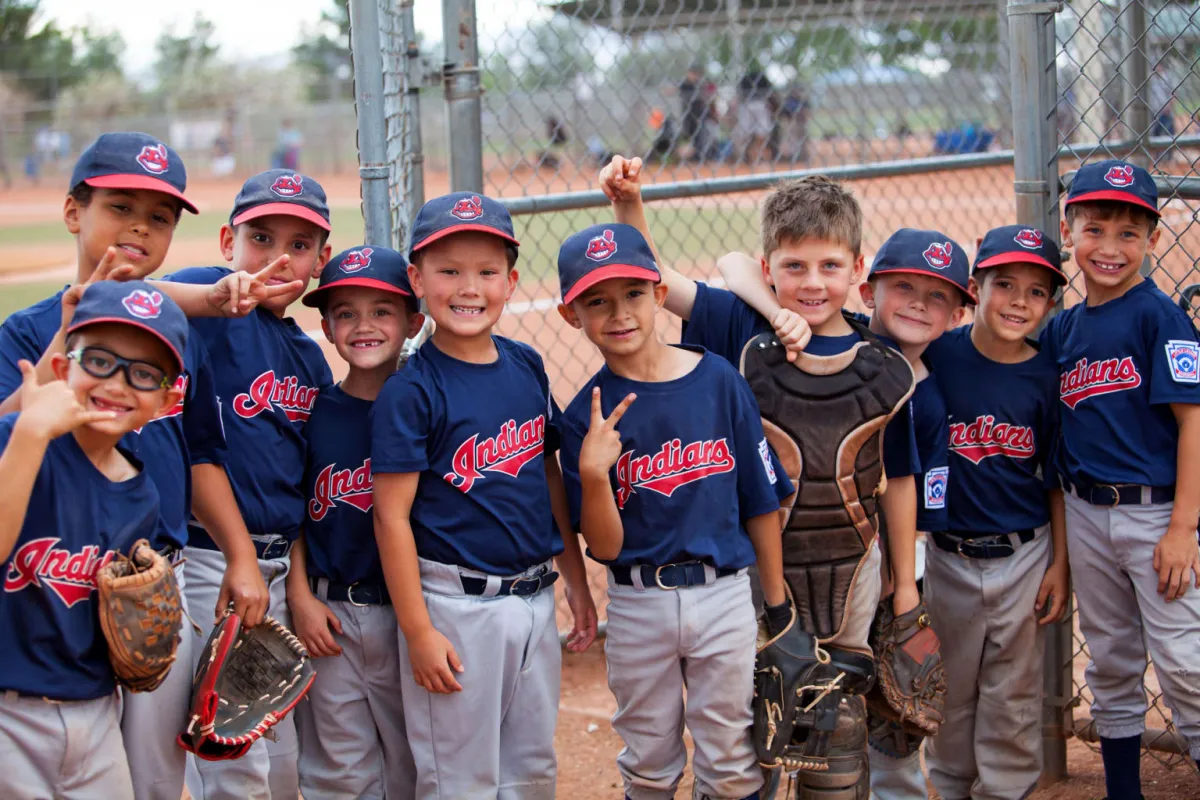 Photo: Little League, via res.cloudinary.com
That was youth sports in America for most of the twentieth century. It happened, it mattered enormously to the kids who played it, and then it was largely gone.
The Beautiful Obscurity of Saturday Morning Games
From the postwar boom of Little League through the recreational soccer explosion of the 1970s and 1980s, amateur youth sports in America existed in a kind of warm, comfortable anonymity. Games were played on municipal fields and school diamonds in front of parents who brought lawn chairs and thermoses of coffee. Scores were tracked on paper scorecards or in spiral-bound notebooks kept by whoever had volunteered to do it that season.
At the end of a game, those numbers might get called in to a local newspaper sports desk — if the league had an organized enough coordinator to do it, and if the paper had space to run a youth sports roundup that week. Most of the time, the results simply lived in the memory of the people who'd been there.
Season statistics were similarly ephemeral. A kid who batted .400 over a summer or pitched a no-hitter on a July afternoon in 1983 might have that achievement written in a league record book that nobody ever digitized, stored in a filing cabinet that was eventually thrown out when the parks department moved offices. The achievement was real. The documentation was essentially nonexistent.
And for decades, nobody thought this was a problem.
What Passed for Coverage
Local newspapers were the primary — often only — media outlet for youth sports in most American communities. A dedicated sports editor at a small-town paper might run weekly roundups of Little League results, sometimes with a photo if a game was particularly notable. High school sports got more coverage, but even that was limited by the practical constraints of print: column inches cost money, and there were only so many pages.
Parents who wanted to preserve memories relied on personal cameras, which meant a handful of prints from a disposable or a 35mm that you had developed at the drugstore. Game action was nearly impossible to capture well without expensive equipment. Most family photo albums from this era contain more pictures of kids in uniform before games than anything that happened during them.
There were no highlight reels. There were no stat aggregators. There was no way for a coach in another city to evaluate a twelve-year-old they'd never seen play. The idea would have seemed faintly absurd.
Then Everything Got Recorded
The transformation happened in layers. First came digital cameras, which made it cheap and easy to photograph games. Then came YouTube, which made it possible to upload video. Then came smartphones, which put a high-definition camera in every parent's pocket on every sideline. Then came dedicated platforms — GameChanger for youth baseball stats, SportsEngine for team management, Hudl for video analysis — that turned what used to be a coach's notebook into a permanent, searchable, shareable record.
Today, a youth baseball game at a well-organized recreational league might be livestreamed on YouTube for grandparents in another state to watch in real time. Every at-bat is logged in an app. Season statistics are compiled automatically and available online. A player's batting average, on-base percentage, and fielding stats from a summer they were eleven years old may still be accessible a decade later.
For high school athletes in particular, the shift has been seismic. Recruiting profiles on platforms like NCSA and BeRecruited allow families to build digital portfolios — stats, video highlights, academic records — that college coaches can browse from anywhere in the country. The process of getting noticed, which once required geographic proximity and personal connections, now operates across state lines through a screen.
What We Gained, What We Gave Away
The gains are real. Grandparents who live a thousand miles away can watch their grandkid pitch a complete game on a Tuesday evening in real time. Talented athletes in small towns who might once have gone undiscovered now have a pathway to visibility that doesn't require knowing the right people. The sheer joy of a great play — a diving catch, a walk-off hit — can be shared with people who love the kid and couldn't be there.
But something else has shifted too, something harder to quantify.
When youth sports existed only in the moment, they belonged entirely to the kids who played them. A bad game was forgotten by Sunday. An embarrassing error didn't live anywhere except in the player's own memory, fading naturally over time. The pressure to perform was real but local — your teammates, your parents, maybe a small crowd of neighbors. The stakes were appropriately scaled to the age of the participants.
Now, a twelve-year-old can have a permanent digital record of their athletic performance. Highlights live on YouTube indefinitely. Stats from seasons played in middle school can be pulled up by strangers years later. And the pressure to build a recruiting profile — to think of yourself as a brand before you've finished growing — has filtered down to ages that would have seemed almost comical to a youth baseball coach in 1985.
The Moment That Used to Just Be a Moment
There's something worth honoring in the old way, even as we've moved past it. The little league season that left no trace wasn't a failure of documentation. It was sports at a human scale — played for the love of it, witnessed by the people who showed up, and released into memory when it was over.
We've gained a lot by recording everything. But we've also permanently changed what it means for a kid to just play a game.