The Eye Exam That Consumed Your Entire Saturday: How Getting Glasses Once Meant Surrendering a Weekend
When Vision Correction Was a Major Life Event
If you needed glasses in 1975, you didn't just pop into a store during lunch break. You scheduled an appointment with one of the three optometrists in town, waited two weeks for an opening, and then blocked out your entire Saturday morning for what felt like a medical procedure.
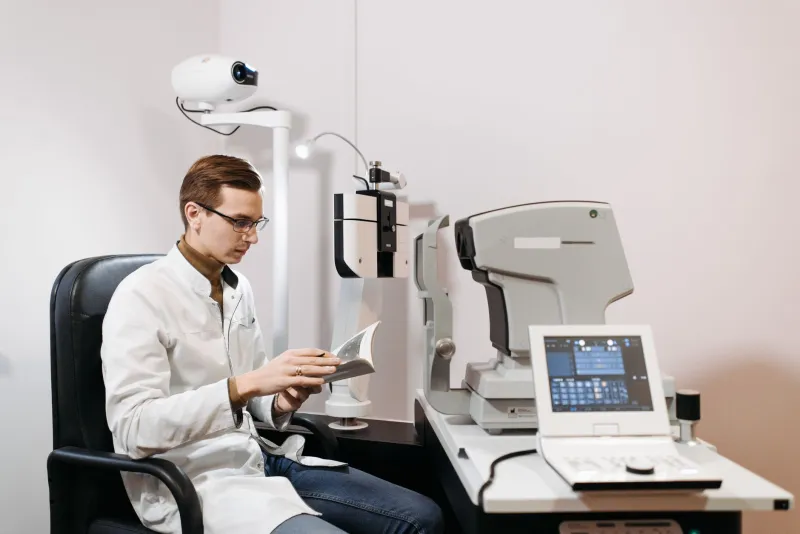
The eye exam itself was an event. No quick puff of air or digital readings—just a doctor with a heavy metal contraption asking "better or worse?" for what seemed like hours. The appointment stretched on as the optometrist manually adjusted lens combinations, scribbled notes by hand, and explained your prescription like he was delivering a medical diagnosis.
The Great Lens Laboratory Wait
Once your prescription was determined, the real waiting began. Your lenses had to be ground at a central laboratory, often hundreds of miles away. The optometrist would mail your prescription to the lab, where technicians would spend days crafting your specific correction by hand.
This wasn't a quick turnaround. Two weeks was standard. Three weeks wasn't unusual. If you had a complex prescription or wanted anything beyond basic glass lenses, you might wait a month. Bifocals? Add another week. Tinted lenses? That was practically custom work.
Meanwhile, you stumbled through life with broken glasses held together by tape, or worse, no vision correction at all. Students missed classroom details. Drivers squinted at road signs. The world became a blur while you waited for science to restore your sight.
The Price That Rivaled Car Payments
Getting glasses wasn't just time-consuming—it was financially devastating. A basic pair of prescription glasses could easily cost $200-300 in 1970s money, equivalent to over $1,500 today. Designer frames? You were looking at prices that rivaled a used car.
Insurance rarely covered vision care. Most families treated glasses like a major purchase, saving up for months and hoping the prescription wouldn't change before they could afford the next pair. Children often wore the same glasses for years, even as their vision changed, because replacement wasn't financially feasible.
The optical shop was a serious place. Frames were locked in display cases. You needed an appointment just to try on options. The optician treated each sale like a significant transaction, because for most families, it was.
Today's Vision Revolution
Walk into any modern optical retailer and the contrast is staggering. LensCrafters promises glasses in about an hour. Walmart offers basic prescription glasses for under $20. Online retailers like Warby Parker let you try frames at home and deliver finished glasses in days, not weeks.
 Photo: Warby Parker, via cdn-www.konbini.com
The technology that once required specialized laboratories now fits in a machine the size of a microwave. Lens grinding that took skilled technicians days can be completed while you grab lunch. Digital eye exams provide precise measurements in minutes, not hours.
Smart phones can even estimate your prescription using just the camera. Apps let you virtually try on hundreds of frame styles. The process that once required weeks of planning now happens as an afterthought during a grocery run.
What We Gained and Lost
The democratization of vision correction is remarkable. Millions of Americans who once lived with blurry vision because they couldn't afford glasses now have access to clear sight for the price of a dinner out. The anxiety of waiting weeks to see clearly has vanished.
But something subtle was lost in the transformation. Getting glasses was once a significant life event that families planned around. The wait built anticipation. When you finally picked up your new glasses, it felt like a genuine improvement to your quality of life.
Today's instant gratification means we've forgotten how precious clear vision really is. We order backup glasses online like we're buying socks. The miracle of corrected vision became so routine that we stopped seeing it as miraculous.
The Weekend That Vision Stole
For previous generations, getting glasses meant surrendering a significant chunk of time and money to the process. It required patience, planning, and financial sacrifice. The entire experience reminded you that clear vision wasn't a given—it was a carefully crafted solution to a biological problem.
Now we complain if our online glasses order takes more than a week to arrive. We've gained convenience and lost the appreciation for one of humanity's most elegant solutions to physical limitation. Before we now know how easy it could be, getting glasses was a weekend-consuming reminder of how much effort goes into helping humans see clearly.