Static, Strangers, and Songs You Never Asked For: The Vanishing Magic of Radio Discovery
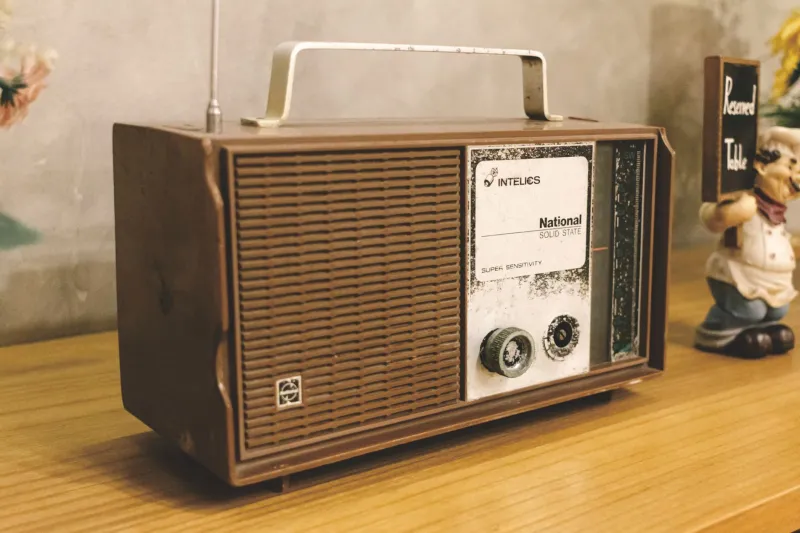
There was a ritual to it. You'd reach over, twist the dial, and land somewhere in the middle of a song you'd never heard. Maybe it was good. Maybe it was terrible. Maybe — and this is the part worth remembering — it was the song that quietly rewired something in your brain and stayed with you for the rest of your life.
That was radio. And for most of the twentieth century, it was the primary way Americans stumbled into music they never would have chosen for themselves.
The DJ Was the Algorithm
Before Spotify's Discover Weekly, before YouTube autoplay, before any of it, there was a person. An actual human being sitting in a booth somewhere, picking records, reading the room, and deciding what a few hundred thousand strangers needed to hear at 10:47 on a Tuesday night.
Those DJs carried real cultural power. In the 1950s and '60s, a single spin on a major market station could launch a career. By the '70s and '80s, FM radio had become a genuine art form — album-oriented rock stations would play deep cuts, B-sides, and full album sides without interruption. You didn't get the hits. You got the record. And if you were lucky enough to be listening with your ear pressed to a transistor radio under the covers past your bedtime, you got something even better: the feeling that you were being let in on a secret.
There was no skip button. There was no thumbs down. You either stayed with it or you didn't.
The Accident Was the Point
Here's the thing about music discovery that we've quietly abandoned: the best finds were never intentional.
You weren't looking for that Tom Waits song. You weren't searching for that obscure Motown deep cut. You were just driving home from work with the radio on, half-paying attention, and then suddenly you weren't. Suddenly you were completely paying attention, pulled in by something you'd never have clicked on in a million years.
That experience — the genuine, unplanned surprise of encountering something unfamiliar and finding out you love it — has become almost structurally impossible in the modern listening environment.
Streaming platforms are built on preference data. They study what you've already played, what you skipped, how long you lingered. Then they serve you more of the same, just slightly varied. It's efficient. It's comfortable. And it has slowly, quietly collapsed the radius of what most people are willing to hear.
Research has backed this up. Studies on streaming behavior consistently show that listeners cluster around familiar genres, familiar tempos, familiar emotional registers. The algorithm learns your comfort zone and builds a wall around it — not out of malice, but because that's what keeps you from hitting pause.
What the Radio Forced You to Sit With
Radio didn't care about your comfort zone. A classic rock station might follow Led Zeppelin with a power ballad you hated. A pop station in 1987 might sandwich Whitney Houston between a novelty song and something from a movie soundtrack you'd never seen. You had no say in it.
And because you had no say, you developed patience. You learned to sit with music that didn't immediately grab you. Sometimes it grabbed you on the third listen — which happened to be the third time that week the station played it, because that's how radio worked. Repetition wasn't annoying; it was how a song got under your skin.
There's a reason so many people who grew up in the pre-streaming era have a richer, weirder musical vocabulary than younger listeners might expect. They didn't curate it. It accumulated. Song by song, station by station, late night by late night.
The Communal Ear
Radio also did something streaming has never been able to fully replicate: it created shared cultural moments at scale.
When a song was in heavy rotation on Top 40 radio in 1984 or 1995 or 2003, everyone heard it. The kid in rural Nebraska and the teenager in downtown Chicago were both overexposed to the same track. That shared experience — even if the song was annoying, even if you were sick of it — formed a kind of cultural glue. You had a common reference point with strangers.
Today's streaming ecosystem is almost the opposite. Playlists are personal. Recommendations are individualized. Two people the same age, living in the same city, with overlapping tastes might have almost no musical overlap if their listening histories diverged early enough. We've gained infinite choice and lost the shared soundtrack.
We Traded Wonder for Convenience
None of this is an argument against streaming. The convenience is real. The access is extraordinary. The ability to hear almost any recording ever made, on demand, from your phone, is genuinely remarkable.
But something specific was lost in the trade, and it's worth naming it: the experience of being surprised by your own taste.
When a DJ played something you'd never heard and you found yourself leaning toward the radio instead of away from it, you learned something about yourself. You discovered a preference you didn't know you had. That kind of self-discovery — accidental, unplanned, delivered by a stranger with good taste — shaped people in ways that a carefully curated personal playlist simply cannot.
The bedroom radio didn't just fill silence. It expanded the world. And we didn't notice we'd lost that until the world got a little quieter and a little more familiar, and we couldn't quite remember the last time a song genuinely caught us off guard.