Six Months of Silence: What It Used to Mean to Wait for a Surgeon's Calendar to Open Up
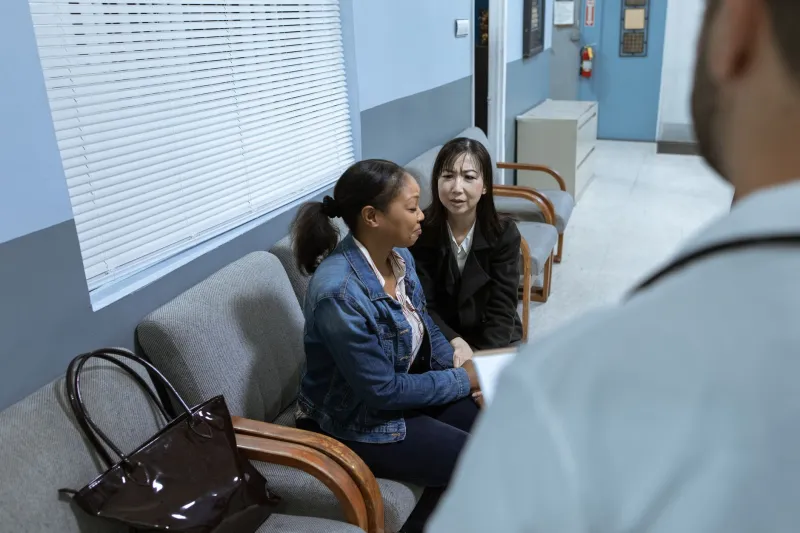
Imagine being told you need to see a specialist, and then being handed a phone number and a vague suggestion that you call sometime next week. No online portal. No app. No text confirmation. Just a number, a receptionist who may or may not pick up, and the understanding that from this point forward, the timeline is completely out of your hands.
That was the American medical scheduling experience for most of the twentieth century. And for millions of patients, it wasn't a minor inconvenience — it was months of quiet, anxious waiting with no visibility into what came next.
The Referral Was Just the Beginning
If you needed a specialist before the internet age, the process started with your primary care doctor writing something down — often literally on a piece of paper — and sending it along through a system that moved at its own pace. The referral letter might go by mail. The specialist's office might call you, or they might not. Following up meant calling during business hours, being put on hold, and sometimes being told the doctor wasn't taking new patients for another four months.
Four months. For something that was worrying you right now.
And once you got the appointment, the information flow didn't exactly accelerate. You'd show up with whatever records you'd managed to gather — often physical copies you'd had to request weeks in advance — and hope the doctor had received the rest. Sometimes they had. Often they hadn't. You'd answer the same questions you'd answered at your primary care visit. You'd wait in a room with outdated magazines and try not to calculate how many days had passed since your first symptom.
No Status Bar, No Updates
One of the strangest things to explain to someone under thirty is what it felt like to be in a medical queue with no way of knowing where you stood.
Today, if you're waiting on a referral or a test result, you can often log into a patient portal and see exactly where things are. Your results might post before your doctor even calls you. You get automated reminders, digital confirmations, and in many cases the ability to message your care team directly and get a response the same day.
Decades ago, none of that existed. You waited for a phone call that might not come until the afternoon before your appointment. You had no way of knowing if your records had arrived, if your insurance had been verified, or if the appointment was even still on. You simply had to trust the system and try not to think about it too hard.
For patients dealing with serious diagnoses — a suspicious scan, a cardiac concern, something that needed surgical evaluation — that silence was not just inconvenient. It was genuinely distressing in a way that's hard to overstate.
The Patience Was Not Optional
What's interesting, looking back, is that people largely accepted this. Not because they were more easygoing or less anxious by nature, but because there was no alternative framework to compare it to. This was simply how medicine worked. You got sick, you waited, you eventually saw someone.
There was a kind of enforced stoicism built into the process. You couldn't refresh a portal. You couldn't read online reviews of the surgeon before you met them. You couldn't compare wait times at competing practices. You made the call, you gave your name, and then you let go — because there was genuinely nothing else you could do.
Some people found a strange peace in that. When the waiting was out of your hands, it was also, in some sense, out of your head. You'd done what you could. The rest was the system's problem.
What Technology Actually Changed
The shift didn't happen overnight. It came in waves — electronic health records in the 1990s and 2000s, then patient portals, then mobile apps, then telemedicine platforms that let you see a provider the same afternoon from your couch.
Each step reduced friction. Scheduling became searchable. Reminders became automated. Records became transferable without a fax machine and a prayer. And the cumulative effect has been significant: Americans today can navigate their healthcare with a level of speed and visibility that would have seemed almost science-fictional to a patient in 1978 or even 1998.
The average wait time to see a new specialist is still not great — studies regularly show it hovering around three to four weeks in many major markets, and longer in rural areas. But three weeks with daily portal access and a confirmation text is a fundamentally different psychological experience than three months with a handwritten note and a phone that may or may not ring.
The Cost of Knowing Everything Immediately
There's a flip side worth acknowledging. The same technology that eliminated the waiting-room silence has introduced a new kind of anxiety: the anxiety of too much information, delivered too fast.
When lab results post to your portal before your doctor has reviewed them, you're reading numbers without context. When you can Google your diagnosis at 2 a.m., you're often reading worst-case scenarios written for medical professionals. The old system forced you to wait for a human interpreter. The new system gives you the raw data and leaves the interpretation to you.
Neither model is perfect. The old one asked too much of your patience. The new one sometimes asks too much of your composure.
But if you had to choose — and most of us already have, by embracing the portals and the apps and the same-day telehealth visits — the efficiency wins. Knowing is almost always better than not knowing, even when what you know is hard. The months of silence weren't building character. They were just months of silence.