Recorded in a Basement, Heard by Nobody: The Invisible Music Career That the Internet Erased Forever
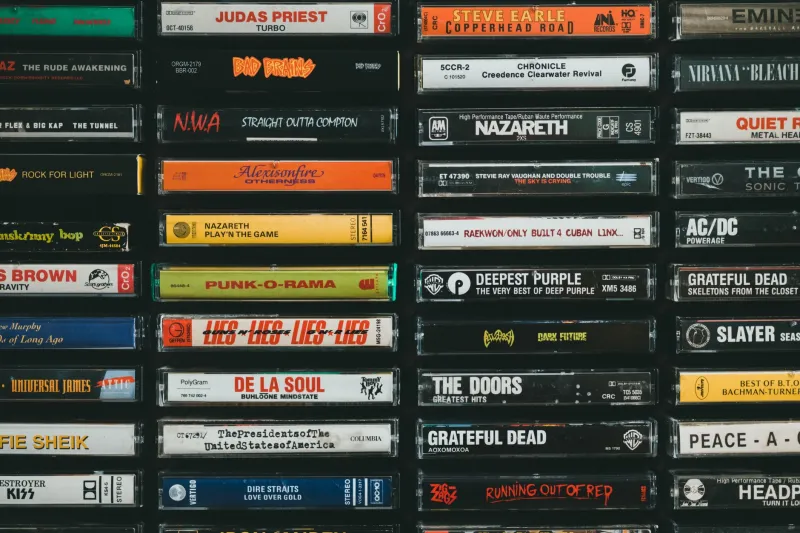
Somewhere in a box in someone's attic, there are cassette tapes. Maybe a hundred of them were pressed. Maybe two hundred, if the band scraped together enough cash. The cover art was photocopied at Kinko's. The music inside was real — written, rehearsed, and recorded by people who genuinely believed in what they were making. And almost no one ever heard it.
This was the reality for thousands of American musicians in the 1980s and 1990s. Not the ones who made it. The ones who didn't — not because they lacked talent, but because talent, back then, was only the starting point of an almost impossibly long road.
The Wall Between a Song and a Listener
Before the internet changed everything, the music industry operated like a fortress with a very small door. Record labels were the gatekeepers, and they had every reason to stay selective. Physical distribution was expensive. Pressing vinyl or CDs cost real money. Getting product onto store shelves required relationships with distributors, and distributors weren't interested in unknowns. Radio airplay required a promotions budget that most independent artists couldn't dream of.
So if you were a band playing original music in, say, Columbus, Ohio, or Baton Rouge, Louisiana, your audience was essentially whoever showed up to your local gigs. Maybe a few hundred people across a good year. You could record a demo tape and mail it to labels — and most bands did exactly that, spending money they didn't have on postage and professional duplication — but the response was almost always silence. Labels received thousands of demos. Most went straight into the trash.
The economics were brutal. Recording time at a professional studio ran anywhere from $25 to $100 per hour in the early 1990s. A halfway-decent album required dozens of hours. For a group of twenty-somethings working day jobs and rehearsing on weekends, that math was crushing. Some bands pooled their savings. Others recorded at home on four-track recorders, accepting the limitations as the price of participation.
The Local Scene Was Everything — And Nothing
For musicians who couldn't crack the national market, the local scene became their entire world. Cities like Minneapolis, Austin, and Seattle developed reputations as genuine incubators of original music, partly because those cities had enough venues, enough fans, and enough infrastructure to sustain a scene. But even in those places, most bands never traveled more than a few hundred miles from home.
There was something beautiful about that insularity, and something heartbreaking. A band could be genuinely beloved in their city — packing small clubs, selling out local record stores' small orders of their self-released cassettes — and be completely invisible everywhere else. There was no mechanism for discovery. No algorithm surfacing your music to someone in Portland because they'd been listening to something vaguely similar. No comment section where a fan in Denver could stumble across your name.
If you didn't get signed, you didn't get heard. It was almost that simple.
What Getting Signed Actually Meant
The label system wasn't just a business structure — it was a cultural filter that shaped what America listened to. Labels signed artists they believed were commercially viable, which meant a lot of genuinely interesting, experimental, or regionally specific music never got amplified. The country heard what the industry decided it should hear.
Independent labels existed and did important work, but they faced the same distribution bottlenecks as everyone else. Getting your record into a chain store like Tower Records or Camelot Music required going through a distributor, and distributors had limited shelf space and limited patience for unproven acts. Even bands with critical buzz in music magazines like Rolling Stone or Spin could struggle to get their physical product in front of buyers.
The result was a massive invisible archive of American music — songs that were written, performed, and recorded, but never meaningfully shared. Those cassette tapes in attics aren't just nostalgia objects. They're evidence of an entire layer of cultural output that the distribution system simply swallowed.
What Changed Everything
The internet didn't just make distribution cheaper. It eliminated the concept of distribution as a barrier entirely. When Napster arrived in 1999, it was initially controversial for all the obvious reasons — but it also signaled something irreversible. Music had become data. Data could travel anywhere instantly. The wall was gone.
By the mid-2000s, platforms like MySpace were letting bands post their music directly to listeners without any intermediary. By the 2010s, SoundCloud, Bandcamp, and eventually Spotify and Apple Music made it possible for a teenager in their bedroom to upload a song and have it heard by someone in another country within hours. YouTube turned music videos — once an expensive, label-funded production — into something anyone could make with a phone.
The numbers are staggering now. Spotify alone has over 100 million tracks. Tens of thousands of new songs are uploaded every single day. The gatekeepers haven't disappeared entirely — the algorithm is its own kind of filter — but the barrier to entry has collapsed.
The Talent That Vanished
Here's the part that sits uncomfortably. There were musicians in the 1980s and 1990s who were genuinely extraordinary — technically gifted, emotionally resonant, ahead of their time — who simply never found their audience because the infrastructure didn't exist to connect them to one. We'll never know their names. Their recordings are gone or deteriorating in someone's storage unit.
Today, a fifteen-year-old with a laptop and a decent microphone can upload something brilliant and wake up to ten thousand plays. That's not a small change. That's a fundamental restructuring of who gets heard and who decides.
The music industry is noisier now, more crowded, harder to navigate in different ways. But the silence that swallowed a generation of American musicians? That particular silence is over. And that's worth pausing to appreciate.