The Blind Date You Had With Every Restaurant: Dining Out Before the Internet Ruined the Surprise
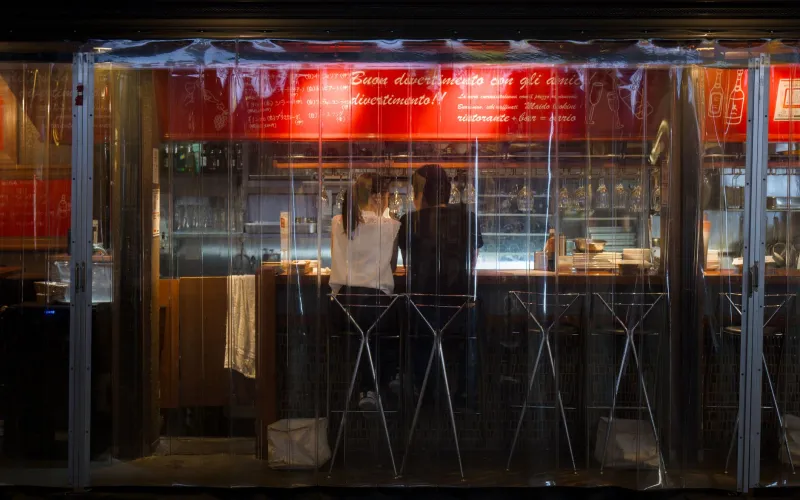
Picture this: It's 1994. You're in an unfamiliar part of Chicago, it's 7 p.m., you're hungry, and you need to find somewhere to eat. You have no phone with a browser. No app. No photos. You have your eyes, your feet, and whatever your coworker mentioned last Tuesday — something about a good Italian place near the river, though she couldn't quite remember the name.
So you walk. You look at windows. You peer at handwritten specials taped to glass. You make a judgment call based on gut instinct and the smell drifting out when someone opens the door.
And then you eat. And it's either wonderful or it isn't. Either way, you have a story.
The Information You Didn't Have (And Didn't Miss)
The modern restaurant experience begins long before anyone sits down. It begins with a search.
You pull up Google Maps, filter by cuisine and price range, scroll through photos of actual dishes, read forty-seven reviews sorted by recency, zoom in on a picture of the tiramisu, check whether the owner responded professionally to the one-star review from 2022, and then — maybe — make a reservation through a third-party app that will text you a reminder the morning of.
By the time you walk through the door, you have formed opinions. You know the menu. You've seen the interior. You have a rough sense of which server gets the best comments. The experience has already begun, and the restaurant hasn't yet had a single opportunity to surprise you.
This is progress, obviously. It is also, quietly, a loss.
How America Actually Found Good Food Before Yelp
Word of mouth was the original review system, and in many ways it was the most trustworthy one. A recommendation from a friend who knew your taste carried more weight than any algorithm, because it came with context. You'll love it — it's loud and the portions are huge and the wine list is terrible but who cares. That sentence tells you more than a 4.2-star average ever could.
Beyond personal networks, serious diners in major cities relied on newspaper critics — real ones, with expense accounts and editorial oversight and a genuine stake in their professional credibility. The late Gael Greene at New York magazine. Jonathan Gold at the LA Weekly. Ruth Reichl, first at the LA Times and then at the New York Times, whose reviews could make a restaurant famous or quietly devastate one.
These critics went to restaurants multiple times before writing a word. They understood context, consistency, and the difference between an off night and a structural problem. Their reviews were essays, not scorecards — they told you what the experience felt like, not just whether the chicken was cooked properly.
For everyone else, there were guides. Zagat Survey, the little burgundy-covered book, was a genuine cultural institution from the 1980s onward — a crowd-sourced rating system that predated Yelp by two decades and required people to physically mail in survey forms. Owning the current Zagat guide for your city meant something. It was a tool, consulted seriously, carried in bags.
The Walk-In Gamble
But a huge portion of American dining was simply improvisational. You were somewhere, you were hungry, and you made a call.
Restaurants understood this. Curb appeal mattered in a way it barely does now. A chalkboard with the day's specials. A warm glow through the window. A maitre d' visible near the door, suggesting that someone was paying attention. These signals were designed to communicate trustworthiness to a stranger with no prior information.
The walk-in gamble produced genuine discoveries — the hole-in-the-wall Vietnamese place in a strip mall that became a family institution for years, the diner that looked forgettable from outside but made pancakes that rewired your relationship with breakfast. It also produced bad meals, overpriced mediocrity, and the occasional food poisoning. That was part of the deal.
What it produced most reliably was stories. Dining out was an event with an uncertain outcome, and uncertain outcomes are the raw material of memory.
What Ratings Did to Restaurants (And to Us)
The review economy changed behavior on both sides of the transaction.
Restaurants, particularly smaller independent ones, became acutely aware that a cluster of bad Yelp reviews in their early months could be fatal. This created pressure to perform consistently from day one, which sounds reasonable until you consider that some of the best restaurants in American history took years to find their footing. The review system has a bias toward the already-established and a particular impatience with the still-becoming.
Diners, meanwhile, began optimizing. The question shifted from let's find somewhere good to let's find the best verified option within these parameters. That optimization is rational. It also, over time, bred a certain risk-aversion — a reluctance to try the unreviewed place, the new opening without a track record, the restaurant that exists only in someone's enthusiastic recommendation.
Food photographers changed the visual language of restaurants entirely. Dishes started being designed, at least in part, to be photographed. Lighting schemes in new restaurants now factor in how they'll render on an iPhone screen. The meal and the documentation of the meal have become almost inseparable.
The Surprise That's Gotten Harder to Find
There's a specific pleasure in being genuinely surprised by a meal — when the room is better than you expected, when a dish you almost didn't order turns out to be extraordinary, when the whole evening exceeds the sum of its parts in ways you couldn't have predicted.
That pleasure still exists. But it requires active effort to engineer now. You have to choose not to look. You have to resist the pull of the search bar and walk in blind, which has become its own kind of countercultural act.
A few food writers have made this their practice — deliberately visiting restaurants with no prior research, as a way of recovering the sensory experience of genuine discovery. The fact that this requires intentional resistance to freely available information says everything about how thoroughly the dynamic has reversed.
Before we now know everything about a restaurant before we arrive, we had something that's genuinely hard to replicate: the possibility of being completely wrong in the best possible way.