Seven Digits You'd Never Forget: What We Surrendered When We Stopped Memorizing Our Own Lives
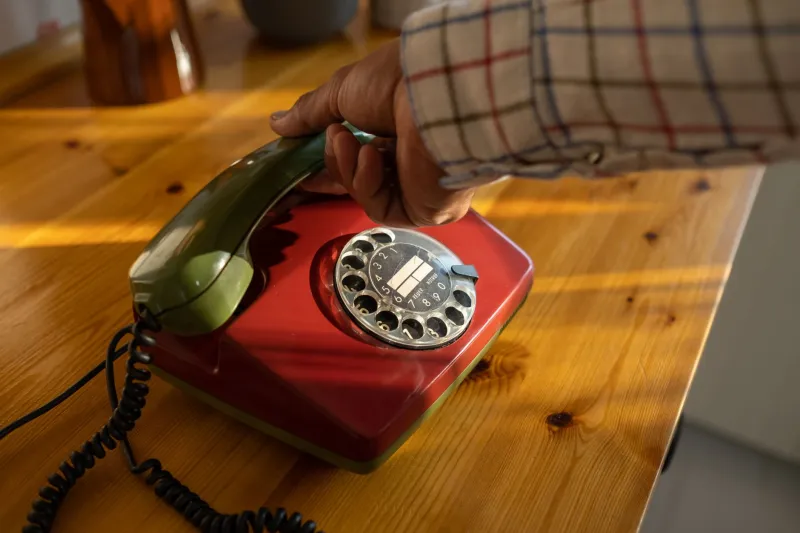
There's a thought experiment worth trying. Right now, without looking at your phone, name five people you'd call in an emergency. Now recite their numbers.
Most people can manage their own cell number. Maybe a spouse or partner. After that, things get murky fast. Parents' numbers? A best friend's? A sibling who lives across the country? Gone — not because you don't care about these people, but because you've never needed to remember. The phone remembers. Why would you?
This is a genuinely new condition in human history. And it arrived so gradually that almost nobody noticed the handoff.
The Numbers We Used to Carry
Grow up in America in the 1970s, 80s, or most of the 90s, and you accumulated phone numbers the way you accumulated anything important: through repetition until it stuck.
You knew your home number first — drilled into you by parents who understood that a lost kid needed to be able to give a number to a stranger or a school secretary. Then came your best friends' numbers, memorized through sheer frequency of use. Your grandparents. The pizza place. The movie theater's recorded showtimes line, which you probably called so often you could recite the options in order.
Beyond phone numbers, the memory load was substantial. Directions weren't looked up — they were given verbally and held in your head. Take 95 north to exit 14, left at the light, past the Sunoco, third house on the right. Addresses were written in address books, yes, but also retained mentally for the people who mattered. Birthdays were remembered because there was no Facebook notification to outsource the obligation.
This wasn't considered a skill. It was just what brains did when information had nowhere else to live.
The Phonebook in Your Pocket
The shift began with contact lists on early mobile phones — the ability to store a number and retrieve it with a scroll. Convenient, obviously. But the cognitive effect was immediate: once a number lived in your phone, the pressure to memorize it evaporated. Why bother when it was right there?
Smartphones accelerated this into something more comprehensive. The entire project of remembering external information — phone numbers, addresses, driving directions, factual knowledge, calendar dates — gradually migrated off the human brain and onto the device. Google became not just a search engine but a cognitive prosthetic, available to answer essentially any question that might require knowing something.
Psychologists have a term for this: cognitive offloading. It's not inherently pathological — humans have always used external tools to extend mental capacity. Writing itself is a form of cognitive offloading. So are calendars, maps, and books. The question isn't whether we use tools. It's what happens when the tools become so comprehensive and so instantly accessible that the internal version of that knowledge atrophies entirely.
What the Research Actually Says
Betsy Sparrow, a cognitive psychologist at Columbia, published a study in 2011 that identified what she called the "Google Effect" — the finding that people are less likely to retain information they believe they can look up later. The brain, it turns out, makes fairly rational decisions about what's worth encoding. If retrieval is easy and reliable, storage feels redundant.
The problem is that the brain doesn't only store information for retrieval. The act of memorization — the rehearsal, the association, the effort of holding something in working memory until it consolidates — appears to build cognitive infrastructure that has value beyond the specific fact being memorized. Rote memory was never just about the content. It was also exercise.
Separately, research on GPS navigation has found that people who rely exclusively on turn-by-turn directions develop weaker spatial cognition than those who navigate by map or by memory. The hippocampus, the brain region most associated with spatial navigation and episodic memory, shows measurably less activation in GPS-dependent navigators. London taxi drivers, famously studied for decades, show unusually developed hippocampal structure — the result of memorizing the entire city's street network. What happens when no one needs to do that anymore is an open question, but not a reassuring one.
The Social Dimension Nobody Talks About
There's a relational aspect to this that gets less attention than the neuroscience.
Knowing someone's phone number by heart was, in a small but real way, a form of intimacy. It meant you'd called them enough times that the sequence had become automatic — wired into your fingers before you consciously decided to dial. Forgetting someone's number, in that era, signaled something. Remembering it signaled something too.
Birthdays are the more obvious example. When Facebook began prompting users about upcoming birthdays, the social obligation was preserved while the effort was eliminated. You still sent the message. But the fact that you remembered without prompting — that the date lived in your head because it mattered — became impossible to demonstrate. Everyone's birthday is equally remembered now because no one actually remembers any of them.
This isn't a catastrophe. But it's a small flattening of something that used to have texture.
The Deeper Trade
None of this is an argument for throwing away your phone or refusing to use GPS. The practical gains from digital memory are enormous and obvious. Getting lost in an unfamiliar city because you refused to use navigation is not resilience — it's performance.
But there's a difference between using tools to extend capacity and using tools to replace it entirely. A musician who uses notation to remember a complex piece is offloading appropriately. A musician who can't play a single bar without the sheet music in front of them has lost something real.
The question worth sitting with is whether we're in the first category or sliding toward the second. Whether the convenience of never having to remember anything has quietly cost us the habit — and eventually the ability — to carry our own knowledge around inside us.
There was something particular about knowing, without looking, the number that connected you to the people you loved. It meant they were already with you, in a small way, before you ever picked up the phone.