The Mystery Roll: When Every Photo Was a Three-Week Gamble
Loading the Dice with Every Click
Every photograph in the pre-digital era began with an act of faith. You'd line up the shot, guess at the lighting, hope your subject wasn't blinking, and press the shutter button knowing you wouldn't discover the results for weeks. That family vacation, your child's first steps, your wedding day—all of it captured in complete darkness, literally and figuratively.
A roll of 35mm film held exactly 24 or 36 exposures, and each click of the shutter consumed one irreplaceable frame. There was no preview screen, no delete button, no second chances. Once you pressed that shutter, the moment was committed to film, for better or worse, and you moved on hoping for the best.
Most families treated their camera like a precious resource. Film cost money, developing cost more money, and wasting shots felt genuinely expensive. You didn't casually snap dozens of photos at dinner—you carefully composed each frame, knowing it might be weeks before you learned whether your artistic vision translated to reality.
The Long Journey to Truth
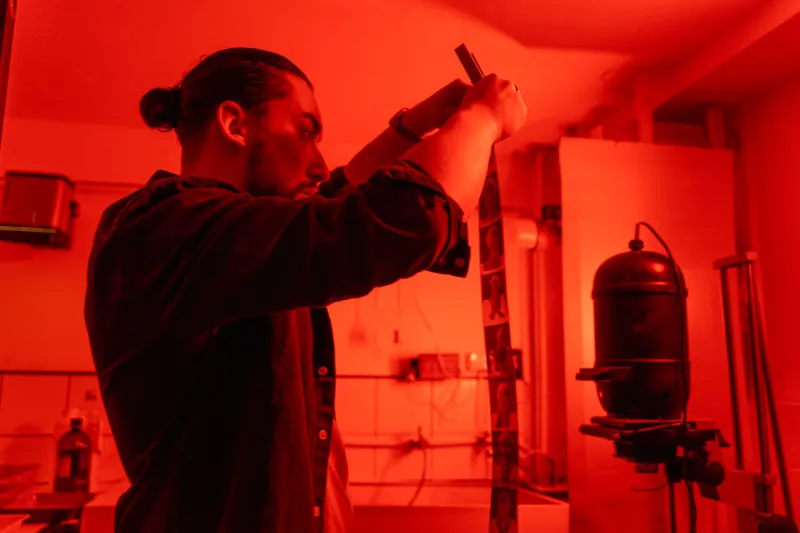
After shooting your final frame, the real waiting began. The film had to be removed from the camera in complete darkness—usually stuffed into a light-proof canister and dropped off at a drugstore photo counter. From there, your precious memories began a journey that felt like sending a letter to a distant relative.
The film traveled to a central processing laboratory, often hundreds of miles away. Technicians developed the negatives in chemical baths, printed each photo individually, and mailed the results back to your local pickup point. This industrial process took minimum two weeks, often three or four if you lived in a smaller town.
During those weeks of waiting, you lived with complete uncertainty. Did the camera work properly? Were the photos overexposed? Did everyone have their eyes open during the group shot? You had no way of knowing whether your vacation memories existed until that manila envelope arrived with your name on it.
The Revelation Envelope
Picking up developed photos was like opening Christmas presents. You'd tear open the envelope with genuine anticipation, not knowing whether you'd find treasures or disasters. The first flip through the stack often brought a mix of joy and disappointment—some photos exceeded expectations while others revealed problems you never saw coming.
Blurry shots were common. Overexposed beaches looked like white voids. Indoor photos often came out too dark to see anyone's faces. Sometimes the camera had malfunctioned, producing double exposures or light leaks that turned your carefully composed shots into abstract art.
But when a photo worked—when the lighting was perfect, when everyone was smiling, when you'd accidentally captured something beautiful—it felt genuinely magical. These successful images became family treasures, carefully placed in photo albums and displayed on walls. Each good photo represented not just a moment in time, but a small victory over uncertainty.
The Economics of Memory
Film photography was expensive in ways that are hard to imagine today. A roll of film cost several dollars, developing cost several more, and if you wanted extra prints to share with relatives, the expenses multiplied quickly. A family vacation might generate $50-100 in photo costs, equivalent to several hundred dollars today.
This expense forced intentionality. You didn't take photos of your lunch or snap seventeen versions of the same sunset. Every frame counted, literally. Parents would ration shots at birthday parties, carefully selecting which moments deserved permanent preservation.
The cost also meant that many life moments simply weren't photographed. Candid daily life, spontaneous gatherings, experimental artistic shots—these were luxuries most families couldn't afford. Photo albums from the film era show only the most significant occasions, creating historical records that emphasized life's highlights while missing its everyday texture.
Digital's Instant Revolution
Today's smartphone cameras have eliminated every uncertainty that defined film photography. You see exactly what you're capturing in real-time. Mistakes are immediately obvious and instantly correctable. Storage is essentially unlimited, and sharing is instantaneous.
Modern phones take better photos than professional cameras from just twenty years ago. AI automatically adjusts exposure, focus, and color balance. You can shoot a thousand photos in an afternoon without spending a penny beyond your phone bill.
The transformation extends beyond technical capabilities. Social media has created new reasons to photograph everything, turning daily life into a constant documentation project. We now capture moments specifically to share them, rather than simply to remember them.
What Uncertainty Taught Us
The limitations of film photography created unexpected benefits. The inability to see results immediately forced photographers to slow down, think carefully about composition, and develop genuine technical skills. You learned to read light, understand your camera's capabilities, and make decisive choices under pressure.
The expense of film also meant that photographs felt precious. Each image represented a deliberate decision to preserve a moment. Photo albums contained only the most meaningful occasions, creating concentrated collections of life's most important events.
The waiting period between shooting and seeing results created anticipation that enhanced the emotional impact of successful photos. When you finally saw a great shot after weeks of uncertainty, it felt like a genuine reward.
The Faith We've Lost
Before we now know that every photo can be perfect and instant, capturing memories required genuine courage. You had to believe that the moment was worth preserving without knowing whether your camera would cooperate. Every family gathering, every vacation, every milestone was documented through pure faith in the process.
That leap of faith is gone now, replaced by certainty and unlimited chances. We've gained technical perfection and lost the thrill of photographic surprise. The mystery that once made every developed photo feel like a small miracle has been replaced by the expectation that every shot should be flawless.
In the end, film photography taught us that some of life's most meaningful experiences require a willingness to trust in uncertainty—and sometimes the wait makes the revelation even sweeter.