The Bookshelf That Was Supposed to Make Your Kids Smarter
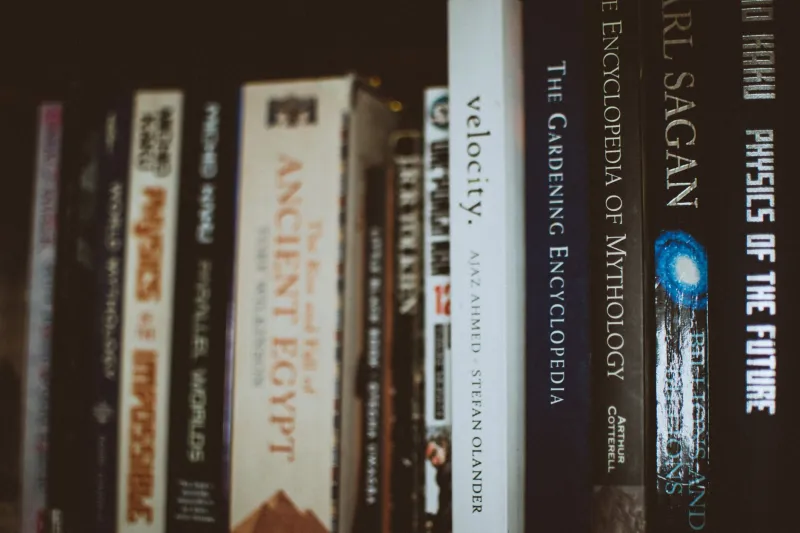
Somewhere in America right now, there's probably a set of encyclopedias sitting in a garage. Maybe World Book. Maybe Britannica. The spines are a little faded, the gold lettering worn down at the edges. They haven't been opened in fifteen years, possibly twenty. Nobody's quite ready to throw them out — they cost so much, once — but nobody's reading them either.
Those books were, for a very long time, one of the most significant purchases a middle-class American family could make. Not just practically significant. Morally significant. Owning a complete encyclopedia set was treated as evidence that you took your children's education seriously.
The story of how that happened, and how completely it unraveled, is one of the stranger chapters in the history of American knowledge.
The Man at the Door With the Briefcase
If you grew up in America between the 1950s and the 1990s, there's a decent chance a salesman once sat at your kitchen table with a briefcase full of sample volumes and a very practiced speech about your children's future.
Door-to-door encyclopedia sales was a genuine industry. Companies like Encyclopaedia Britannica, World Book, and Collier's employed thousands of salespeople who worked neighborhoods systematically, targeting families with school-age children. The pitch was sophisticated and emotionally calibrated: your kids were going to face a competitive world, knowledge was the foundation of success, and the family that invested in a complete reference library was the family that cared.
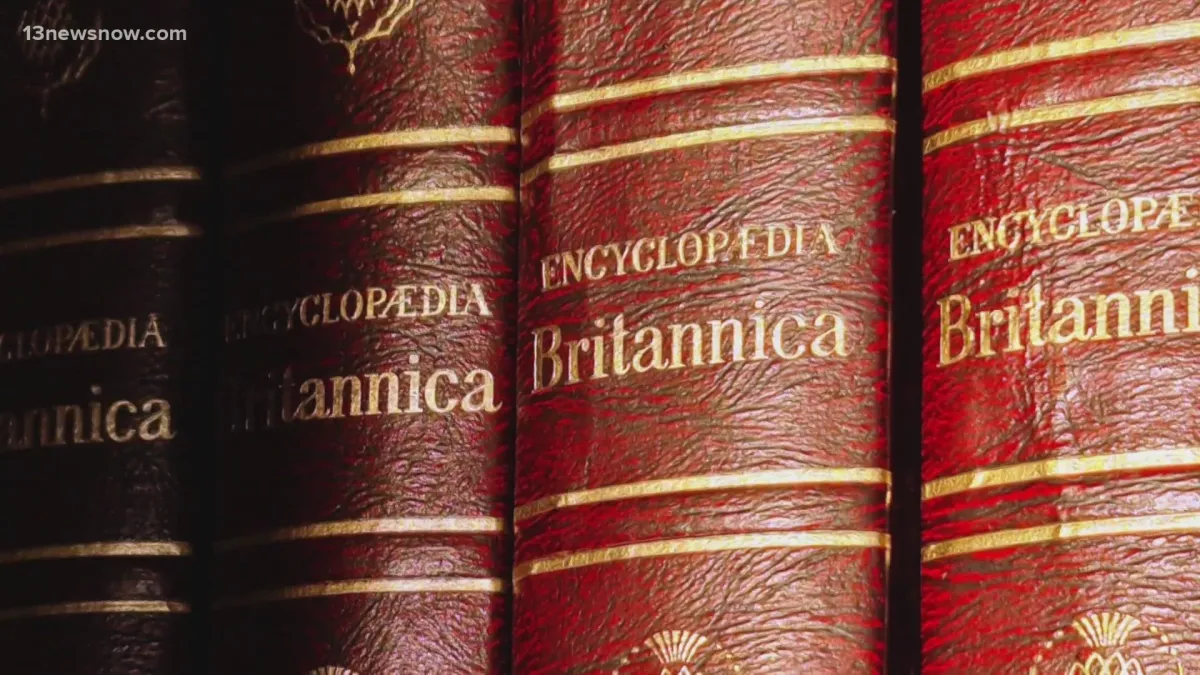 Photo: Encyclopaedia Britannica, via media.13newsnow.com
The price tags were extraordinary. A full set of Encyclopaedia Britannica in the 1970s could run $1,000 or more — roughly $6,000 in today's dollars. World Book was somewhat cheaper but still a substantial commitment. Salespeople offered payment plans, which made the purchase feel manageable while ensuring families were still paying it off years later.
Parents signed. Many of them felt good about signing. They were doing something for their kids.
Twenty-Six Volumes of Mostly Correct Information
The encyclopedias themselves were genuinely impressive objects. Thousands of articles, written by credentialed experts, covering history, science, geography, art, and biography. The illustrations were carefully reproduced. The binding was solid. These were real books, built to last.
The problem was the publication date.
By the time a set of encyclopedias was researched, written, edited, printed, bound, warehoused, shipped, sold, and placed on your shelf, it was already running behind. The 1974 edition described the world as it existed sometime in 1972 or 1973. Events that happened after the editorial cutoff simply didn't exist within those covers.
For stable historical information — the causes of the Civil War, the structure of the solar system, the biography of Abraham Lincoln — this was fine. But for anything that moved, anything that evolved, anything that was still happening, the encyclopedia was frozen in amber the moment it left the printer.
And it stayed frozen. Families kept sets for a decade, sometimes two. The 1968 edition that helped with your seventh-grade report on space exploration didn't know that Apollo 13 had nearly ended in disaster, because Apollo 13 hadn't happened yet when those pages were written. The science section that explained the latest thinking on nutrition reflected whatever consensus existed at the time of printing, not what researchers had since discovered.
You trusted those books completely. They looked authoritative. They felt authoritative. They were, in many cases, simply out of date.
The School Project That Lived or Died by Volume M
For American students from the postwar era through the early 1990s, the encyclopedia was the primary research tool for homework. Not one of several options — the option. If your family had a set at home, you used it. If they didn't, you went to the school library and hoped the right volume was on the shelf and hadn't already been checked out by someone else doing the same assignment.
The limitations shaped the work. You wrote about what the encyclopedia covered, in roughly the proportions the encyclopedia emphasized. If your assignment was to research a particular country and the encyclopedia's article was thin — maybe because the country had recently changed its name, or because the editors had simply allocated fewer pages to that region — your report was thin too. There was often nowhere else to go.
Citations were simple: "World Book Encyclopedia, Volume 8, 1981." Teachers accepted this without question. The encyclopedia was considered a reliable source, full stop. The idea that it might be wrong, or incomplete, or outdated by a decade, wasn't really part of the conversation.
When the Model Collapsed
Encyclopaedia Britannica stopped printing its traditional multi-volume set in 2012, after 244 years. The announcement was treated as a cultural milestone, a moment of genuine nostalgia. But the truth is the model had been dying slowly since the mid-1990s, when CD-ROM encyclopedias began offering more information for a fraction of the price, and then dying faster after 2001, when Wikipedia demonstrated that a continuously updated, freely accessible, globally maintained reference could exist at all.
The comparison is almost unfair. Wikipedia has over 6.7 million articles in English alone. It's updated thousands of times per day. It's free. It links to primary sources. When something happens in the world, it's reflected on Wikipedia within hours.
The encyclopedia sitting in that garage was updated once, at the printing press, and never again.
What's remarkable isn't that encyclopedias lost. It's that for so long, they were the best we had — and families spent thousands of dollars and felt genuinely grateful for the privilege.