The Storm You Never Saw Coming: How America Finally Learned to Read the Sky
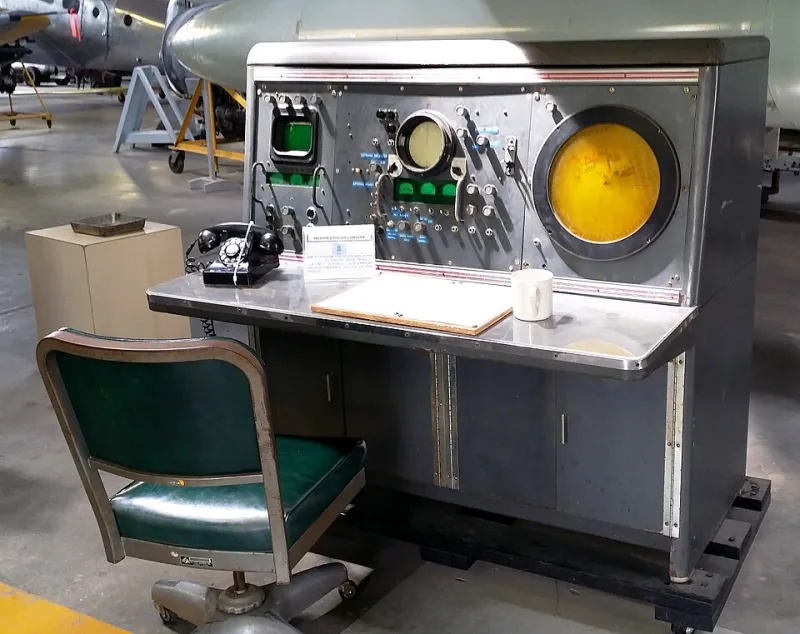
Photo: Eric Friedebach, CC BY 2.0, via Wikimedia Commons
On September 8, 1900, a hurricane made landfall on Galveston, Texas. It killed somewhere between 6,000 and 12,000 people — the deadliest natural disaster in American history. The storm wasn't a surprise in the way we might imagine. Meteorologists knew something was out there. But the tools to track it, model it, and warn the people in its path simply didn't exist. By the time Galveston understood what was coming, the water was already rising.
 Photo: Galveston, Texas, via urbanmatter.com
More than a century later, a storm of that magnitude would trigger emergency alerts on every smartphone within 200 miles, mandatory evacuations days in advance, and near-continuous television coverage tracking the system hour by hour. The death toll would be a fraction of what Galveston suffered.
That transformation — from helplessness to hyperawareness — didn't happen all at once. It was built, piece by piece, over decades of scientific effort, political investment, and hard lessons learned in the wreckage of disasters that didn't have to be as deadly as they were.
Forecasting in the Dark Ages of Meteorology
For most of American history, predicting the weather was closer to educated guessing than science. Farmers read cloud formations and wind shifts. Sailors watched barometric pressure and the color of the horizon. The U.S. Weather Bureau, established in 1870, collected observations from stations across the country and telegraphed summaries to regional offices — but the data was sparse, the analysis was slow, and the forecasts rarely looked more than a day ahead.
The fundamental problem was visibility. Weather systems are enormous, three-dimensional, and fast-moving. Without the ability to see the full picture — the temperature and pressure at different altitudes, the moisture content of air masses hundreds of miles away — forecasters were essentially working blind. They could describe what was happening where they stood. They couldn't reliably predict what would happen next.
The consequences were measured in lives. The Tri-State Tornado of 1925 cut a 219-mile path through Missouri, Illinois, and Indiana, killing nearly 700 people. Many communities had no warning at all. The Great New England Hurricane of 1938 slammed Long Island and Connecticut with almost no advance notice, killing over 600. The Schoolchildren's Blizzard of 1888 caught people so completely off guard that children were found frozen to death within yards of shelter they never found because the snow hit without warning.
 Photo: Long Island, via www.en-vols.com
The Technologies That Changed Everything
The shift began during World War II, when military necessity drove rapid advances in meteorological science. Weather affected every operation — bombing runs, naval movements, amphibious landings. The Allied invasion of Normandy in 1944 was famously delayed by 24 hours based on a forecast from a single meteorologist who correctly identified a narrow window of acceptable conditions. Weather forecasting, suddenly, was a matter of life and death on a massive scale.
The technologies that emerged from that era transformed civilian forecasting. Radar, originally developed to track aircraft, turned out to be extraordinarily useful for tracking precipitation. By the 1950s, weather radar networks were being established across the United States, giving forecasters their first real-time picture of storm systems as they moved.
The next leap came with satellites. The first weather satellite, TIROS-1, launched in 1960 and sent back the first images of cloud cover from space. For the first time, meteorologists could see entire storm systems from above — hurricanes taking shape over the Atlantic, massive cold fronts sweeping down from Canada, atmospheric patterns that would have been invisible from the ground. The age of blind forecasting was ending.
Doppler radar arrived in the 1980s and 1990s, adding the ability to detect not just precipitation but wind speed and direction inside a storm. This was transformative for tornado detection. Instead of waiting until a funnel cloud was visible on the ground, forecasters could now identify the rotating winds that create tornadoes before they touched down — buying precious minutes of warning time that saved lives.
The Revolution in Your Pocket
All of that hardware would have remained the exclusive domain of professional meteorologists if not for one final development: the smartphone.
Today, the average American has access to weather forecasting tools that would have been unimaginable to the scientists of the 1950s. Apps like Weather.com, Dark Sky (before Apple absorbed it), and the National Weather Service's own platform offer hyperlocal, hour-by-hour predictions that track precipitation to specific neighborhoods. Wireless Emergency Alerts push tornado warnings, flash flood notices, and severe thunderstorm advisories directly to your phone without you doing anything at all.
The National Weather Service now issues tornado warnings an average of 13 minutes before a twister touches down — compared to virtually zero warning time in the mid-20th century. Hurricane track forecasts have improved so dramatically that a five-day forecast today is roughly as accurate as a one-day forecast was in the 1970s. The system isn't perfect. Forecasters will tell you that freely. But the gap between what we knew then and what we know now is almost incomprehensible.
The Lives the Numbers Don't Show
It's difficult to fully appreciate how much this progress has mattered because the disasters that didn't happen leave no visible record. The town that evacuated before a Category 4 hurricane doesn't make the same kind of news as the one that got hit without warning. The family that got a tornado alert and moved to the basement isn't a statistic. The improvement shows up quietly, in death tolls that are lower than they would otherwise have been.
But the numbers that do exist are striking. The deadliest U.S. tornado on record killed 695 people in 1925. The deadliest in recent decades killed a fraction of that, despite hitting populated areas. Hurricane death tolls have dropped dramatically even as coastal populations have grown. Blizzards that once killed hundreds now mostly inconvenience people who ignored the forecast.
The sky hasn't gotten calmer. If anything, climate patterns are becoming more volatile. What changed is our ability to see what's coming — and to get out of the way in time.
Your grandfather didn't have a weather app. He had a window and a feeling in his knees. That wasn't superstition. It was the best technology available. We've come a very long way since then.