When Getting a Phone Required Government-Level Paperwork and a Six-Month Wait
The Phone Company Owned Everything
Imagine walking into a store today, pointing at a smartphone, and being told you can't buy it. Instead, you'll need to fill out an application, pay a deposit, and wait six months for a technician to install it in your home. Oh, and you'll rent it for life — never actually owning the device.
That's exactly how Americans got telephones for most of the 20th century.
Before 1984, AT&T held a government-sanctioned monopoly over virtually all telephone service in America. You didn't buy a phone; you rented one from Ma Bell. You didn't choose your equipment; they decided what sat on your kitchen counter. And you certainly didn't walk out of a store with phone service — you applied for it like you were seeking a mortgage.
The Application Process Nobody Remembers
Getting a telephone in 1970s America started with paperwork. Lots of it.
First, you'd visit the local telephone company office — a sterile, government-building-like space with fluorescent lights and metal desks. There, a representative would hand you forms asking for your employment history, references, and proof of residence. Moving to a new apartment? You'd need to prove you could afford the monthly service fees, which often required a letter from your employer.
The deposit alone could equal several weeks' worth of groceries. In 1975, new customers typically paid between $25 and $75 upfront — equivalent to roughly $140 to $420 today — just for the privilege of renting a basic rotary phone.
Then came the waiting. Installation appointments were scheduled weeks or months in advance, and you had to be home during the entire day they might show up. No two-hour windows, no text updates. Just "sometime Thursday" and the hope your boss would let you take the day off.
One Style, One Color, Take It or Leave It
Choice was a foreign concept in the pre-deregulation phone world. AT&T offered a handful of models, usually in basic black or occasionally beige. Want a red phone to match your kitchen? Too bad. Prefer push-button over rotary? That cost extra — a lot extra.
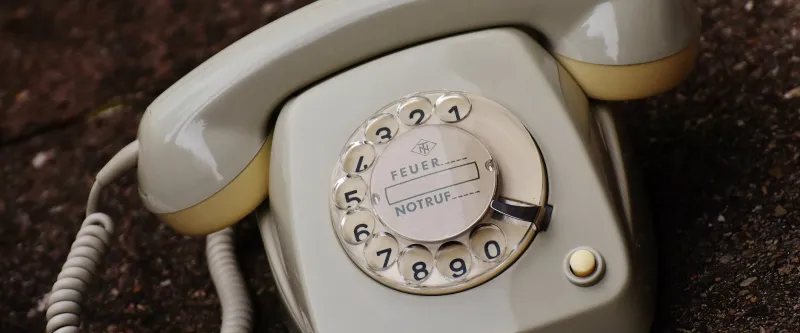
The standard Model 500 rotary phone dominated American homes for decades, not because consumers loved it, but because AT&T decided it was good enough. The phone sat wherever the company installed the jack, typically in the kitchen or hallway. Want an extension in the bedroom? Another application, another installation appointment, another monthly fee.
Families planned their home layouts around where the phone company decided to put their equipment. The kitchen phone became a central fixture not by choice, but by corporate decree.
When the Technician Was King
The installation day felt like a minor holiday. Entire families would stay home waiting for the telephone technician — a figure who wielded almost mystical power in pre-digital America.
These technicians didn't just plug in a device. They drilled holes through walls, ran wires through your house, and installed equipment that belonged to AT&T forever. They carried special tools, spoke in technical jargon, and made decisions about your home's phone setup that you couldn't question.
Break your rented phone? You couldn't fix it yourself or buy a replacement. You had to call the phone company, schedule another service appointment, and wait for an authorized technician to either repair or replace their equipment.
The Bill That Never Ended
Monthly phone bills in the AT&T era were exercises in confusion and frustration. Beyond basic service fees, customers paid equipment rental charges that continued indefinitely. That black rotary phone might cost $2 per month to rent — forever. Over a decade, you'd pay more in rental fees than the phone was worth, but you'd never own it.
Long-distance calls were priced like luxury items. Calling your sister in another state required careful planning and budget allocation. Families kept kitchen timers next to their phones, ending conversations mid-sentence when the predetermined time limit approached.
Businesses maintained detailed logs of every long-distance call, with employees required to justify charges that could easily exceed their daily wages for a single cross-country conversation.
The Revolution Nobody Saw Coming
AT&T's breakup in 1984 changed everything overnight. Suddenly, Americans could buy phones at department stores, choose from dozens of styles and colors, and plug them into any wall jack without waiting for a technician.
The transformation was so complete that most people today have no memory of the old system. Walk into any convenience store and you'll find phones more advanced than anything AT&T offered selling for less than the old monthly rental fees.
From Monopoly to Pocket Computer
Today's smartphone purchase takes minutes. You walk into a store, compare features, buy the device, and leave with more computing power than NASA used to reach the moon. No applications, no waiting lists, no technician appointments.
The contrast is staggering: a device that once required months of bureaucracy and a lifetime of rental payments now sits in gas stations next to candy bars, available to anyone with a credit card.
The phone system that once seemed permanent and unchangeable vanished so completely that explaining it to younger Americans feels like describing life on another planet. Yet millions of people lived through this transformation, watching a tightly controlled utility become the foundation of our connected world.
Before we now know instant communication as a basic expectation, Americans treated phone service like a privilege granted by corporate bureaucracy — and somehow, we thought that was normal.