When Every Business Letter Was a High-Stakes Test of Your Education
When Every Business Letter Was a High-Stakes Test of Your Education
Picture this: You're applying for your dream job in 1978. You've crafted the perfect cover letter, highlighting your experience and enthusiasm. You're three-quarters through typing it on your IBM Selectric when you realize you've spelled "definitely" as "definately." Your heart sinks. There's no backspace that can fix this. No delete key to save you. You have exactly two choices: send a letter with a glaring spelling mistake to your potential employer, or crumple up the paper and start completely over.
Welcome to the world before spell check, where every piece of written communication was a one-way bet on your own intelligence.
The Typewriter Tyranny
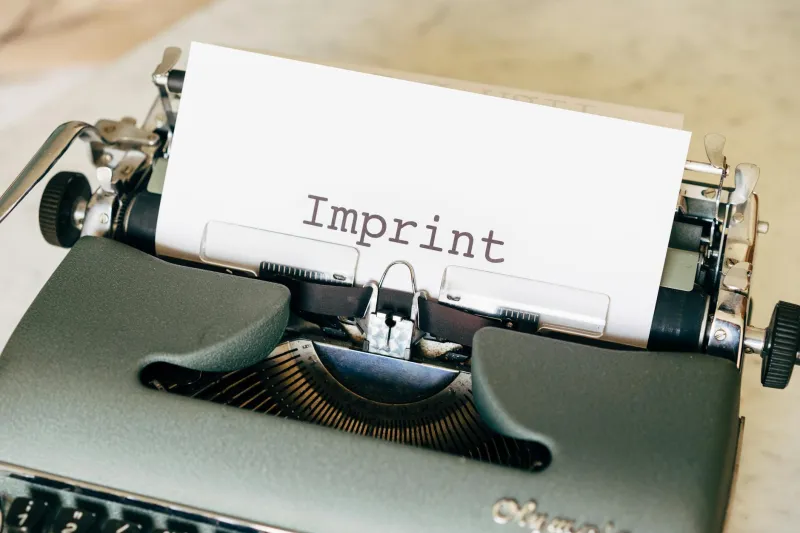
For most of the 20th century, the typewriter ruled office communication. These mechanical beasts were unforgiving masters that demanded perfection on the first try. Unlike today's word processors, typewriters offered no second chances. Each keystroke was permanent, stamped into the paper with the finality of a court verdict.
Professional typists became the heroes of the business world, not just for their speed, but for their accuracy under pressure. A skilled secretary could type 80 words per minute with maybe one error per page — a feat that seems almost superhuman by today's standards. These professionals spent years developing muscle memory for proper spelling and grammar, because their livelihood depended on getting it right the first time.
White-Out and correction tape became office lifelines, but they were imperfect solutions. A document covered in correction fluid screamed "amateur" to anyone who received it. For important correspondence, there was really only one acceptable standard: perfection.
The Mental Gymnastics of Pre-Digital Writing
Before you could Google "how to spell bureaucracy" or let autocorrect fix "recieve" to "receive," writers had to carry entire dictionaries in their heads. People developed elaborate mental tricks to remember tricky spellings. "I before E except after C" became gospel, even though English has more exceptions to that rule than followers of it.
Businesspeople kept physical dictionaries within arm's reach of their desks. The smart ones had multiple copies — one for the office, one for home, maybe a pocket version for travel. Merriam-Webster wasn't just a reference book; it was a career-saving tool.
Writing a business letter meant planning every sentence before you typed it. You couldn't just brain-dump your thoughts and clean them up later. You had to think through grammar, word choice, and spelling simultaneously. This created a generation of more deliberate writers, but also meant that many people simply avoided writing whenever possible.
The Carbon Copy Catastrophe
Making copies before photocopiers were common meant using carbon paper — thin sheets that transferred your typing to multiple pages at once. This system amplified the stakes of every mistake. One spelling error didn't just ruin your original letter; it ruined every copy you were making.
Imagine typing a memo that needed to go to twelve department heads, only to discover a glaring error on the final paragraph. That wasn't just one ruined page — that was starting over with twelve fresh sheets of paper and carbon copies.
When Secretaries Were Human Spell Checkers
The rise of professional secretaries wasn't just about typing speed or answering phones. These skilled workers served as the human equivalent of today's grammar and spell check software. A good secretary could catch errors, suggest better word choices, and ensure that every piece of correspondence reflected well on their boss.
This created an interesting dynamic where your written communication skills were often only as good as your secretary's. Executives who couldn't spell "accommodate" correctly could still send flawless letters, as long as they had skilled support staff to clean up their drafts.
The Anxiety Economy
This unforgiving system created what we might call an "anxiety economy" around written communication. People genuinely feared writing letters, memos, or applications because the stakes felt so high. A single misspelled word could undermine your credibility or cost you a job opportunity.
Many people simply avoided writing when they could. Phone calls became the preferred method for anything important, because at least when you mispronounced a word, it didn't create a permanent record of your mistake.
The Digital Revolution Changes Everything
The shift began slowly in the 1980s with word processors that allowed basic editing and deletion. Suddenly, you could fix mistakes without retyping entire pages. But the real game-changer came with software spell checkers in the 1990s.
Microsoft Word's red squiggly lines under misspelled words were revolutionary. For the first time in human history, a machine could catch your spelling mistakes in real-time and suggest corrections. The anxiety that had plagued writers for generations began to dissolve.
Today, we have autocorrect that fixes mistakes as we type, grammar checkers that suggest better sentence structure, and AI writing assistants that can help craft entire documents. We've gone from a world where every written word required careful consideration to one where we can fire off emails and texts with barely a thought about spelling or grammar.
What We Lost and Gained
This technological shift removed enormous barriers to written communication, democratizing the ability to write professionally. People who might have been excluded from certain careers due to spelling difficulties could suddenly compete on more equal footing.
But we may have lost something too. The careful, deliberate approach to writing that the typewriter era demanded created more thoughtful communication. When every word counted, people chose their words more carefully.
Today's instant, correctable communication has made us more prolific writers but perhaps less precise ones. We can afford to be sloppy because we know the safety net is there.
The next time your phone autocorrects "definately" to "definitely" without you even noticing, take a moment to appreciate just how dramatically the stakes of written communication have changed. We've moved from a world where spelling mistakes could derail careers to one where artificial intelligence quietly fixes our errors before anyone sees them.
That's not just technological progress — it's the elimination of one of humanity's longest-running anxieties about putting thoughts into words.