The Barber Who Knew Your Father's Cowlick and Your Son's First Haircut Date
The Barber Who Knew Your Father's Cowlick and Your Son's First Haircut Date
Walk into any Great Clips or Sport Clips today, and you'll be greeted by a cheerful stranger who asks how you'd like your hair cut. You'll explain your preferences to someone who's never seen you before and likely never will again. Fifteen minutes later, you're out the door with a decent haircut and a receipt.
Sixty years ago, this interaction would have been unthinkable.
When Your Barber Was Part of the Family
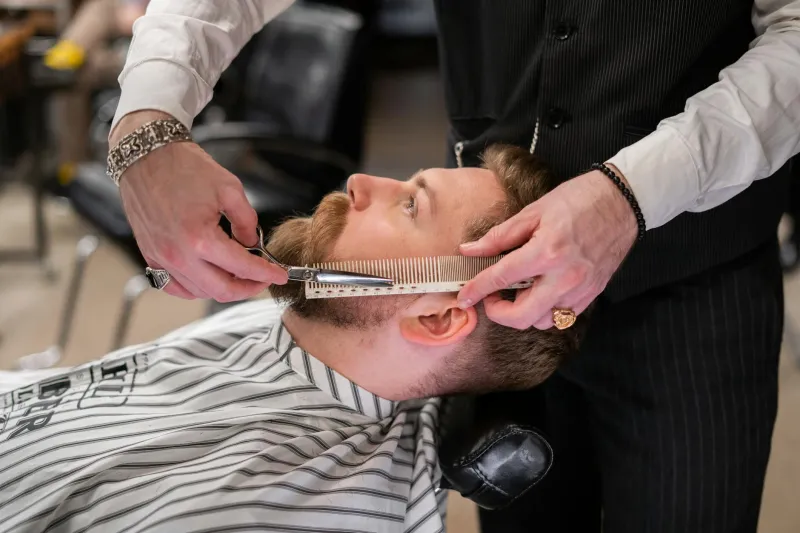
In 1960s America, most men had their barber. Not a barbershop they preferred, but an actual human being who had been cutting their hair for years, sometimes decades. Joe knew that your father always wanted the sideburns a little longer. Frank remembered that your cowlick fought back unless he cut against the grain on the left side. Tony could tell when you were stressed because you'd ask for "just a trim" instead of your usual cut.
These weren't just service providers—they were neighborhood fixtures who often outlasted the local mayor. A good barber might serve three generations of the same family, watching boys grow into men, learning their stories, and becoming a repository of family history that sometimes rivaled the family Bible.
"My grandfather took my father to Sal's shop on Mulberry Street," recalls 78-year-old Frank Ricci from Boston. "Then my father took me to Sal. When Sal retired, his son took over, and I brought my own boys there. Four generations, same chair."
The Ritual That Built Communities
The old-school barbershop wasn't just about hair. It was theater, therapy session, and town hall rolled into one. Men would arrive early just to claim a spot on the wooden bench, where they'd wait their turn while catching up on neighborhood gossip, debating the Red Sox's chances, or arguing politics with the passion of Supreme Court justices.
The barber orchestrated these conversations like a conductor, knowing exactly when to chime in with a joke to defuse tension or when to redirect the discussion away from topics that might cause real offense. He was part diplomat, part entertainer, and part confessor.
These shops operated on what economists might call "relationship capital." Your barber extended credit when times were tough, remembered your son's graduation date, and somehow always knew when you'd gotten a promotion before you told him. The haircut was almost secondary to the human connection.
When Convenience Killed Community
The transformation didn't happen overnight. Chain salons began appearing in shopping centers during the 1970s, promising shorter waits, extended hours, and consistent results. Why wait for old Giuseppe when you could walk into SuperCuts any evening after work?
The appeal was undeniable. Modern salons offered convenience that traditional barbershops couldn't match. No appointments necessary. Open on Sundays. Trained stylists who understood contemporary cuts, not just the same three styles they'd been perfecting since the Eisenhower administration.
By the 1990s, the writing was on the wall. Rising commercial rents made it nearly impossible for single-chair operators to survive in gentrifying neighborhoods. Young barbers, facing student loans and modern living costs, couldn't afford to buy established shops from retiring owners.
What We Gained and Lost
Today's salon experience offers genuine advantages that nostalgia can't erase. Modern stylists receive comprehensive training in current techniques, sanitation standards that would horrify barbers from the 1960s, and exposure to diverse hair types and styling preferences. You can book appointments through apps, read reviews online, and find someone who specializes in exactly what you want.
Women, largely excluded from traditional barbershops, now have equal access to professional hair care. Prices, adjusted for inflation, have generally decreased. And let's be honest—some of those old barbers had been phoning it in for years, coasting on relationships while their skills atrophied.
But something irreplaceable disappeared in the transition. The modern salon customer is anonymous, interchangeable. Your stylist might be excellent, but they don't know that you always get your hair cut before job interviews, that your ex-wife used to complain about your sideburns, or that your teenage son is finally old enough to join you for his first real haircut.
The Human Cost of Efficiency
The old barbershop represented something larger than hair care—it was a space where men could be vulnerable without judgment, where stories were shared across generations, and where community bonds were strengthened one conversation at a time.
Dr. Ray Oldenburg, who coined the term "third place" to describe spaces that aren't home or work, identified barbershops as crucial community gathering spots. When they disappeared, something in the social fabric tore.
Today's men are more isolated than their grandfathers, despite being more connected digitally. We've gained efficiency and convenience, but we've lost the casual intimacy that came from sitting in the same chair, talking to the same person, month after month, year after year.
Looking Back, Moving Forward
A small revival is underway. Hipster barbershops in Brooklyn and Portland attempt to recreate the old atmosphere, complete with vintage chairs and straight-razor shaves. But these new establishments, despite their good intentions, can't replicate the generational relationships that made the original barbershops special.
The transformation from neighborhood barber to chain salon mirrors larger changes in American life—the prioritization of convenience over relationship, efficiency over community, and choice over continuity. We've gained much in the process, but we've also lost something that can't be measured in minutes saved or dollars spent.
Your grandfather's barber knew his story. Your barber today knows your name, if you're lucky.