The Medical Maze: How Specialist Care Once Required the Patience of a Saint
The Phone Call That Started Everything
Picture this: Your family doctor just told you that chest pain needs a cardiologist's attention. In 1985, this meant your physician would hand you a business card and say "call Dr. Thompson's office." What happened next was a journey through medical purgatory that could stretch for months.
The receptionist would inform you that Dr. Thompson was booking appointments for October—and it was currently June. Your medical records? Those would need to be physically mailed from your primary care office, a process that could take weeks assuming nothing got lost in transit. Meanwhile, you'd go home with a growing sense of dread and absolutely no visibility into whether your condition was urgent or routine.
The Paper Trail That Never Ended
Before electronic health records, your medical history lived in manila folders scattered across different offices throughout your city. Getting a specialist consultation meant orchestrating a complex dance of paperwork. Your primary doctor's office had to photocopy your relevant records, stuff them in an envelope, and mail them to the specialist's office. Sometimes they'd fax the most critical pages, but fax machines had a habit of running out of toner or jamming at the worst possible moments.
Patients became their own medical couriers, carrying X-rays in large manila envelopes from appointment to appointment. You'd show up at the specialist's office only to discover they never received your records, forcing you to reschedule and start the paper chase all over again.
The Waiting Room Time Warp
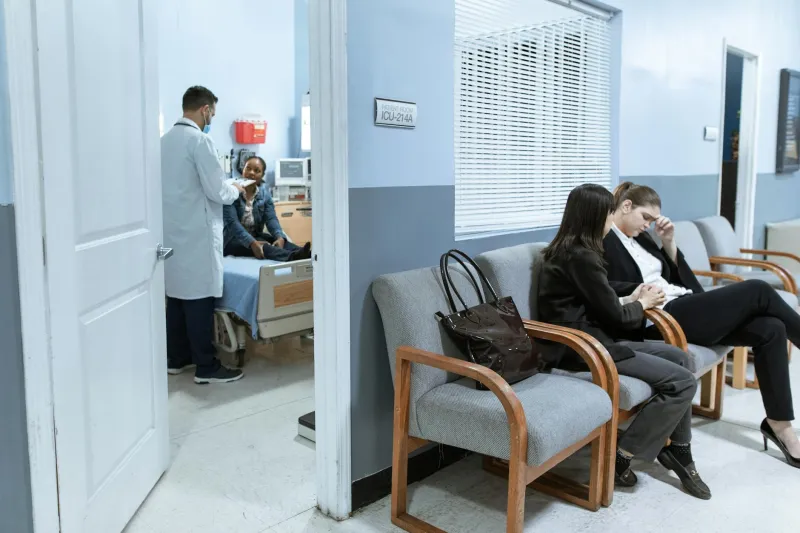
Specialist offices in the 1980s and 1990s operated on a different relationship with time. Arriving for your 2 PM appointment meant settling in for what could easily become a three-hour commitment. The waiting room magazines were from 1987, the coffee was burnt, and the receptionist would periodically announce that "the doctor is running a little behind" without any indication of when you might actually be seen.
Patients accepted this as normal. You'd take a half-day off work for a fifteen-minute consultation because there was no other choice. The specialist held all the cards—they had the expertise you needed, and you'd wait as long as it took to get it.
When Uncertainty Was Standard Operating Procedure
Perhaps most stressful was the complete lack of information. After finally seeing the specialist, you might need additional tests or a follow-up appointment. This meant more weeks of waiting, more phone calls to schedule appointments, and more time wondering whether your condition was serious. There was no patient portal to check test results, no secure messaging to ask quick questions, and certainly no way to research your condition online.
Families would spend months in limbo, not knowing whether a suspicious mole was cancer or if chest pain indicated heart disease. The anxiety of waiting often felt worse than whatever medical issue had prompted the referral in the first place.
The Digital Revolution in Healthcare
Today's specialist care operates in a completely different universe. Online scheduling systems let you book appointments at your convenience, often within days rather than months. Electronic health records mean your complete medical history travels instantly between providers. Many specialists offer telehealth consultations for initial evaluations, eliminating the need to take time off work or arrange childcare.
Patient portals provide immediate access to test results, appointment schedules, and secure messaging with healthcare providers. You can research your condition, read about treatment options, and arrive at appointments as an informed participant in your care rather than a passive recipient of whatever information the doctor chooses to share.
The Speed of Modern Medicine
What once required months now often happens in days. A primary care doctor can send an electronic referral to a specialist who can review your records and offer an appointment within the week. Urgent cases can be triaged immediately, with critical consultations happening the same day via telemedicine.
The transformation goes beyond convenience—it's literally saving lives. Conditions that once went undiagnosed for months due to scheduling delays now get rapid attention. The cardiac patient who might have waited three months for a consultation in 1985 can now have an electrocardiogram reviewed by a cardiologist within hours.
What We Gained When We Left the Maze Behind
The old system wasn't just inefficient—it was cruel. Patients endured months of uncertainty about potentially life-threatening conditions simply because that's how the system worked. The power imbalance between patients and providers was stark, with little accountability for delays or poor service.
Today's healthcare system has its problems, but the democratization of information and the elimination of bureaucratic bottlenecks represent genuine progress. The anxiety that once accompanied specialist referrals has largely disappeared, replaced by a sense of agency and access that previous generations couldn't imagine.
The medical maze that once consumed months of patients' lives has been replaced by digital highways that connect people with the care they need, when they need it. It's a transformation so complete that younger patients can barely imagine a world where seeing a specialist required the patience of a saint and the organizational skills of a project manager.