Check In, Pray, Wait: What a Hospital Stay Actually Looked Like Before Modern Medicine
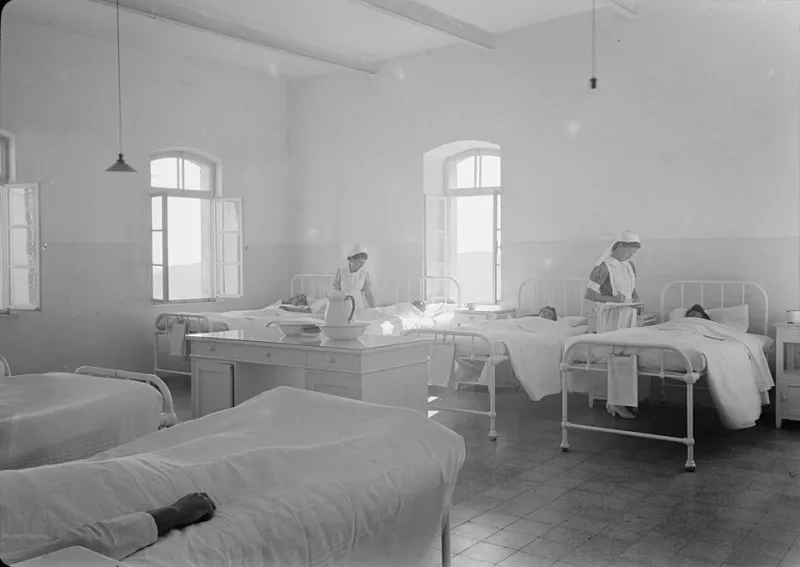
Photo: Matson Collection, Public domain, via Wikimedia Commons
If you were admitted to an American hospital in the 1940s, the building itself might have impressed you. Clean linoleum, crisp white uniforms, a pharmacy with gleaming glass bottles. What happened behind those doors, though, was a very different story — one that anyone under 70 today would struggle to believe.
The Infection You Couldn't See Coming
The single biggest difference between then and now has a name most people have forgotten the weight of: bacteria.
Penicillin existed in 1941, but barely. It was so scarce that after treatment, doctors famously recovered the drug from patients' urine to reuse it. For most of the decade, a simple scratch, a burst appendix, or childbirth itself could trigger sepsis with nothing to stop it. Surgeons operated with skill but no backup — if infection set in, the options were more surgery, prayer, and luck.
A woman who developed an infection after a C-section in 1945 faced roughly even odds. Today, the same complication is a serious-but-manageable event, handled with antibiotics delivered within the hour.
Childbirth: A Ward, Not a Room
Speaking of childbirth — this is where the contrast gets sharpest.
In the 1940s, a laboring mother wasn't wheeled into a private suite with a partner at her side and a playlist. She was placed in a maternity ward with a dozen other women, often sedated with "twilight sleep," separated from her newborn for hours at a time while babies stayed in the nursery. Fathers waited in a smoking lounge down the hall, pacing, sometimes for a full day.
The mortality numbers explain the clinical distance. Maternal death in the U.S. was around 376 per 100,000 live births in 1940. By the 2020s, it had fallen by roughly 90 percent. Infant mortality dropped even further. Every routine delivery today carries a safety margin that 1940s mothers couldn't have imagined — mostly thanks to antibiotics, blood transfusion, and neonatal care.
Recovery Meant Weeks, Not Days
Here's the part that would shock a modern patient most: the bed.
Recovery in the 1940s was measured in weeks. Hernia repair? Plan on ten days to two weeks in the hospital. Gallbladder surgery? Often longer. And the recovery wasn't just passivity — it was enforced immobility, because nobody yet understood that bed rest itself was dangerous. Patients lay flat for days, developing pneumonia and blood clots that we now prevent by getting people up and walking the same day as surgery.
A hip fracture in 1945 could mean a month in a hospital ward and often permanent disability or death. Today it's typically surgery within 48 hours, physical therapy within a day, and discharge in under a week.
What We Absorbed Without Noticing
Now walk through a hospital today with 1945 eyes. Continuous heart monitoring on every patient. Blood banks stocked and cross-matched. Imaging that sees inside a body without cutting it open. Pain management that lets you sleep after major surgery. A pharmacy shelf where infection is an inconvenience, not a verdict.
None of these existed in usable form. Each one is invisible to us — just background furniture of modern healthcare.
The Progress Hiding in Plain Sight
It's easy to complain about a four-hour emergency room wait or a confusing insurance bill, and those complaints are real. But zoom out to the timeline, and the 2020s hospital is a near-miracle by any historical standard.
The patient in the 1940s ward didn't know what they were missing, because the missing things hadn't been invented yet. We know. We live on the other side of the biggest quiet revolution in human history — the one where going into a hospital stopped being a coin flip.