The Five-Hour ER Visit That Urgent Care Made Extinct
When Getting Sick Meant Clearing Your Calendar
Picture this: It's 1985, and you wake up on a Saturday morning with a fever of 102°F and a throat that feels like sandpaper. Your family doctor's office is closed until Monday, and calling their answering service means maybe—maybe—getting a callback in a few hours. You have exactly two options, and both of them are terrible.
Option one: Tough it out until Monday and hope you can get an appointment sometime that week. Option two: Pack a book, some snacks, and your patience for what will inevitably become a five-to-eight-hour odyssey at the emergency room.
This was the reality of American healthcare for most of the 20th century. Getting sick outside of business hours meant entering a medical purgatory that nobody talks about anymore because we've collectively forgotten how brutal it used to be.
The Emergency Room That Wasn't for Emergencies
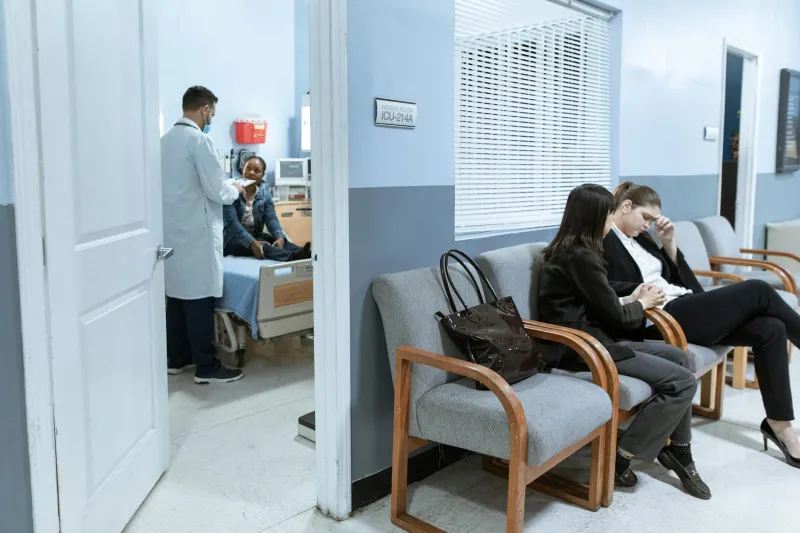
Emergency departments in the 1980s and early 1990s were chaotic mixing bowls of genuine trauma cases and everyday ailments. You'd sit for hours in a waiting room where someone with chest pains might be next to a kid with an earache, while a construction worker with a nail through his hand waited behind a college student who needed stitches from a kitchen accident.
The triage system meant that unless you were actively dying, you waited. And waited. And waited. Nurses would call names every hour or so, and half the time it wasn't yours. People brought crossword puzzles, entire novels, and sometimes even pillows because everyone knew this was going to be an all-day affair.
The financial reality was just as brutal. An ER visit for strep throat could easily cost $800-1,200 in today's money, even with insurance. But what choice did you have? When you're sick, you're sick.
The Geography of Desperation
In most American cities, there might be three or four emergency rooms serving hundreds of thousands of people. If you lived in the suburbs, the nearest ER could be a 30-minute drive away—assuming you felt well enough to drive yourself or could find someone to take you.
Parents particularly remember this era with a special kind of dread. When your toddler spiked a fever at 10 PM on a Friday night, you were looking at a weekend-long medical adventure. Pack the diaper bag, bring entertainment for the other kids, and prepare to spend Saturday in a hospital waiting room because that's simply how the system worked.
Doctors knew this reality too. They'd often tell patients to "wait and see" for conditions that would be treated immediately today, simply because the alternative—sending someone to the ER for a non-emergency—seemed worse than the illness itself.
The Revolution Hidden in Strip Malls
Sometime in the late 1990s and early 2000s, something remarkable started happening in American strip malls, right between the dry cleaners and the sandwich shops. Urgent care centers began popping up like mushrooms after rain, and they fundamentally changed the math of getting sick.
Sudenly, that Saturday morning fever scenario had a third option: drive to the strip mall, walk in without an appointment, see a doctor within 30 minutes, and be back home with a prescription before lunch. The cost was a fraction of an ER visit, the wait time was measured in minutes instead of hours, and the entire experience felt more like visiting a regular doctor's office than surviving a medical emergency.
These weren't just convenient alternatives—they were complete game-changers. Urgent care centers could handle everything from broken bones and deep cuts to strep throat and ear infections. They had X-ray machines, basic lab equipment, and doctors who could prescribe antibiotics or refer you to specialists.
The Smartphone That Became Your Doctor
But the real revolution was still coming. Today, that same Saturday morning fever might not require leaving your house at all. Telemedicine apps can connect you with a doctor in under 10 minutes. Many pharmacy chains offer minute clinics where nurse practitioners can diagnose and treat common conditions while you wait for your prescription to be filled.
Some health insurance plans now include 24/7 virtual urgent care as a standard benefit. You can literally video chat with a doctor at 2 AM from your bedroom and have a prescription sent to your pharmacy before you get dressed.
The Emergency Room That Found Its Purpose
This shift didn't just make life easier for patients—it transformed emergency medicine itself. Today's ERs can focus on what they were always supposed to handle: genuine emergencies. Heart attacks, strokes, severe trauma, and life-threatening conditions get faster, better care because the waiting rooms aren't clogged with people who just need antibiotics for strep throat.
The average ER wait time has actually decreased over the past two decades, even as the population has grown, largely because urgent care centers and telemedicine have siphoned off the non-emergency cases that used to overwhelm the system.
The Wait We Don't Miss
Ask anyone who remembers the pre-urgent care era, and they'll tell you about specific ER visits that consumed entire weekends. The businessman who spent his only day off sitting in a hospital waiting room for stitches. The parent who missed their kid's soccer game because of a trip to urgent care that turned into an eight-hour medical marathon.
Today's parents might complain about a 45-minute wait at urgent care, not realizing they're living through what would have seemed like a medical miracle to previous generations. The idea that you can walk into a medical facility without an appointment, see a doctor quickly, and leave with treatment for a reasonable cost would have seemed like science fiction just 30 years ago.
We've become so accustomed to convenient, immediate healthcare that we've forgotten what it was like when getting sick meant planning for a lost day and a financial hit that could derail your budget. The waiting room that never closes wasn't a metaphor—it was just Tuesday in American healthcare, before we figured out a better way.