Before Google, Answering a Simple Question Could Wreck Your Entire Afternoon
Before Google, Answering a Simple Question Could Wreck Your Entire Afternoon
It's a Tuesday night in 1994. Dinner is wrapping up, and someone at the table makes a claim — let's say they insist that Mount Everest was first summited in 1952, not 1953. Someone else disagrees. Voices rise slightly. The argument has that particular dinner-table energy where nobody is going to back down without proof.
So what do you do?
You can't check. Not right now. The encyclopedia is on the bookshelf in the living room — if you have one, and not every family did — and if the answer is in there, great. If it isn't, or if the volume you need is missing, or if the entry doesn't go into enough detail, you're stuck. You either accept that the argument will never be officially resolved, or you write yourself a note to look it up tomorrow. At the library. During business hours.
The correct answer, for the record, is 1953. Edmund Hillary and Tenzing Norgay. But in 1994, confirming that simple fact with certainty could genuinely take until the next day.
This was normal life. Not a hardship, exactly — just the texture of how information worked. And we've forgotten it almost completely.
What "Looking Something Up" Actually Involved
For anyone under 35, it may be genuinely difficult to internalize how much friction surrounded basic information retrieval before the internet became a household fixture. It wasn't just slower. It required physical effort, planning, and a tolerance for dead ends.
Take something as routine as planning a vacation. Today, you open a browser, type your destination, and within thirty seconds you have hotel options ranked by price and review score, a seven-day weather forecast, a list of restaurants with photos and menus, and a map showing exactly how far each attraction is from your hotel. The whole research process, for a week-long trip, might take an hour.
In 1993, the same process looked something like this:
You called the airline — an actual phone call, where you waited on hold — to ask about flight availability and prices, which the agent quoted you from a system you couldn't access yourself. You called back if you wanted to compare. You contacted the visitor's bureau of your destination and requested a tourism packet, which arrived by mail about ten days later. You asked friends if they'd been there. You checked a travel guidebook — Fodor's or Frommer's — if your local bookstore had a current edition for that region. You called hotels directly to ask about rates, availability, and what was nearby.
By the time you had assembled enough information to make confident decisions, two to three weeks had passed. And you still weren't entirely sure the hotel was as nice as it sounded on the phone.
The Library Was the Internet, Except It Closed at Eight
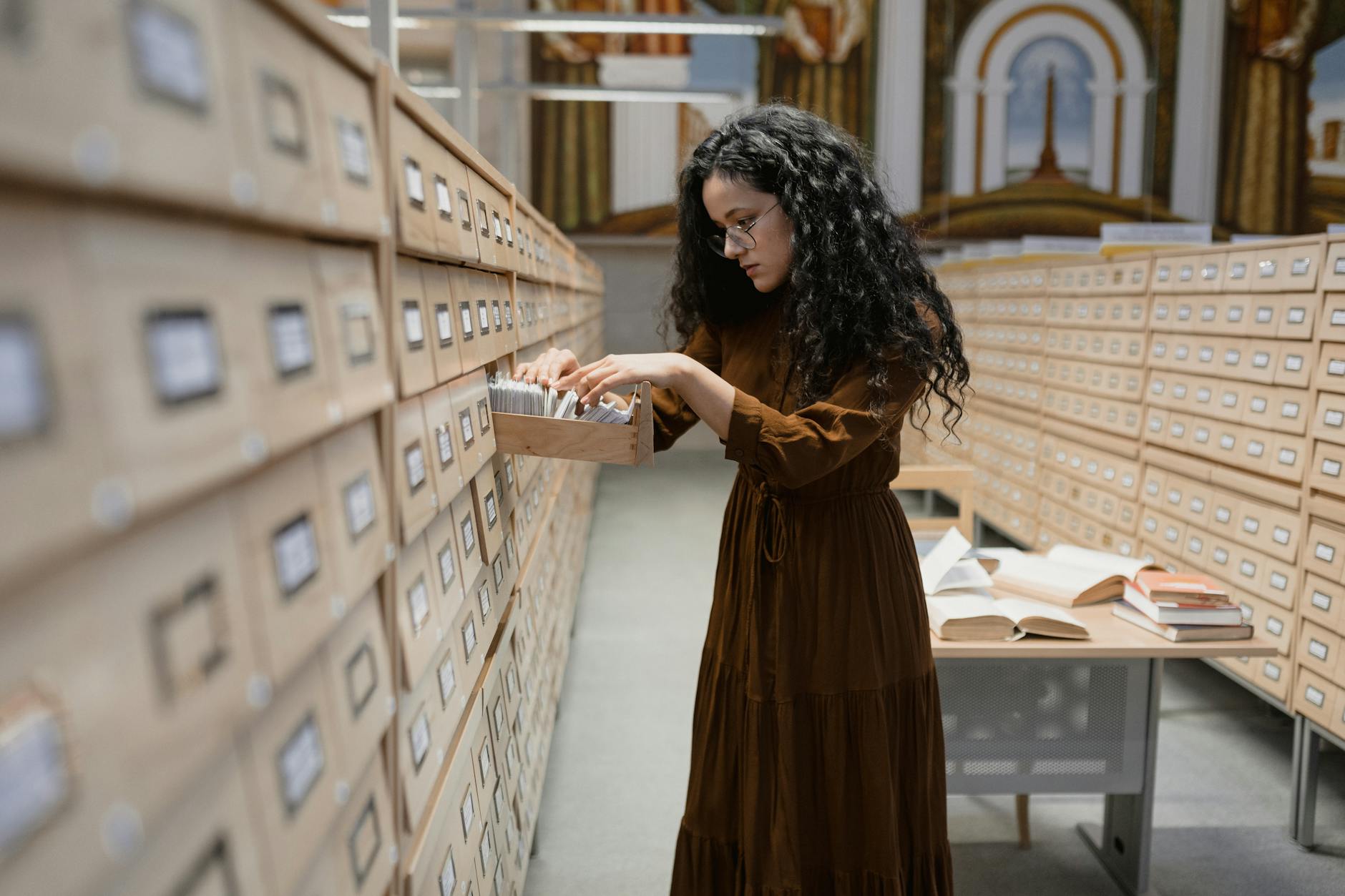
For serious research — school papers, medical questions, legal information, historical facts — the public library was the primary resource for most Americans well into the 1990s. And the library was genuinely useful. Reference librarians were skilled professionals who could navigate card catalogs, periodical indexes, and microfilm archives in ways that made them almost magical to a confused student.
But the library had constraints that we've entirely eliminated from our lives now. It had hours. It had a finite collection. It had one copy of the book you needed, and someone else might have checked it out. The most current edition of a reference work might be two or three years old. Newspaper archives existed on microfilm, which required a specific machine, a specific skill set, and a specific tolerance for eyestrain.
If you needed something the local library didn't have, you could request an interlibrary loan. The book would arrive in one to three weeks. If you needed it sooner, you were out of luck.
Directory assistance — dialing 411 — could connect you to a phone number if you knew the name and city of the person or business you were looking for. But it couldn't tell you their hours, their address in a format you could visualize, their reviews, or whether they were currently open. That information simply wasn't accessible in any convenient form.
The Rewiring We Don't Talk About
What's fascinating about the shift from that world to this one isn't just the convenience. It's what the change has done to us — to our patience, our memory, and our relationship with not knowing things.
In a pre-Google world, people carried more information in their heads out of practical necessity. Phone numbers, addresses, directions, historical facts, recipes — you memorized things because retrieval was expensive. The cost of forgetting was real, measured in time and inconvenience.
Today, the brain has largely outsourced that storage function. Psychologists call it "cognitive offloading" — the tendency to rely on external systems rather than internal memory when those systems are reliably available. Studies have found that people are less likely to retain information they believe they can easily look up later. We remember where to find the answer more readily than we remember the answer itself.
The tolerance for uncertainty has also shifted in ways that are harder to measure but easy to feel. In 1994, you might go days or weeks without resolving a question that had occurred to you. You learned to sit with not knowing. Today, an unanswered question creates a kind of low-grade itch that most people scratch within minutes, often by reaching for a phone before the thought has fully formed.
Neither state is purely better or worse. But they are genuinely different ways of moving through the world.
Thirty Years Is a Blink
Here's the thing that tends to get lost in conversations about the internet: 1994 isn't ancient history. People in their forties remember it clearly. It was a world with functioning infrastructure, cultural sophistication, and billions of people living full, complex lives. It just didn't have the thing we now consider as basic as running water.
The first widely used web browser, Mosaic, launched in 1993. Google didn't exist until 1998. Broadband internet didn't reach majority adoption in American homes until around 2004. The smartphone era, which put all of that into a pocket, only began in earnest in 2007.
The complete transformation of how human beings access information happened, in historical terms, overnight. And it happened so smoothly, and integrated so thoroughly into daily life, that most people don't experience it as a transformation at all.
But it was. The dinner-table argument that once went unresolved until the next library visit now ends in thirty seconds, with a Wikipedia citation read aloud from a phone. The vacation that once required weeks of phone calls and mailed brochures now gets planned in a lunch break.
We live in the after. We've just stopped noticing how different it is from the before.