Standing in Line for Hours Just to Update Your Car Registration: How Government Errands Used to Devour Entire Days

The Day You Lost to Paperwork
There was a time in America when renewing your car registration wasn't something you did during a coffee break. It was something you scheduled like surgery—carefully planned around work, with backup childcare arranged and a full tank of gas because you never knew how long you'd be sitting in that idling line of cars wrapped around the Department of Motor Vehicles building.
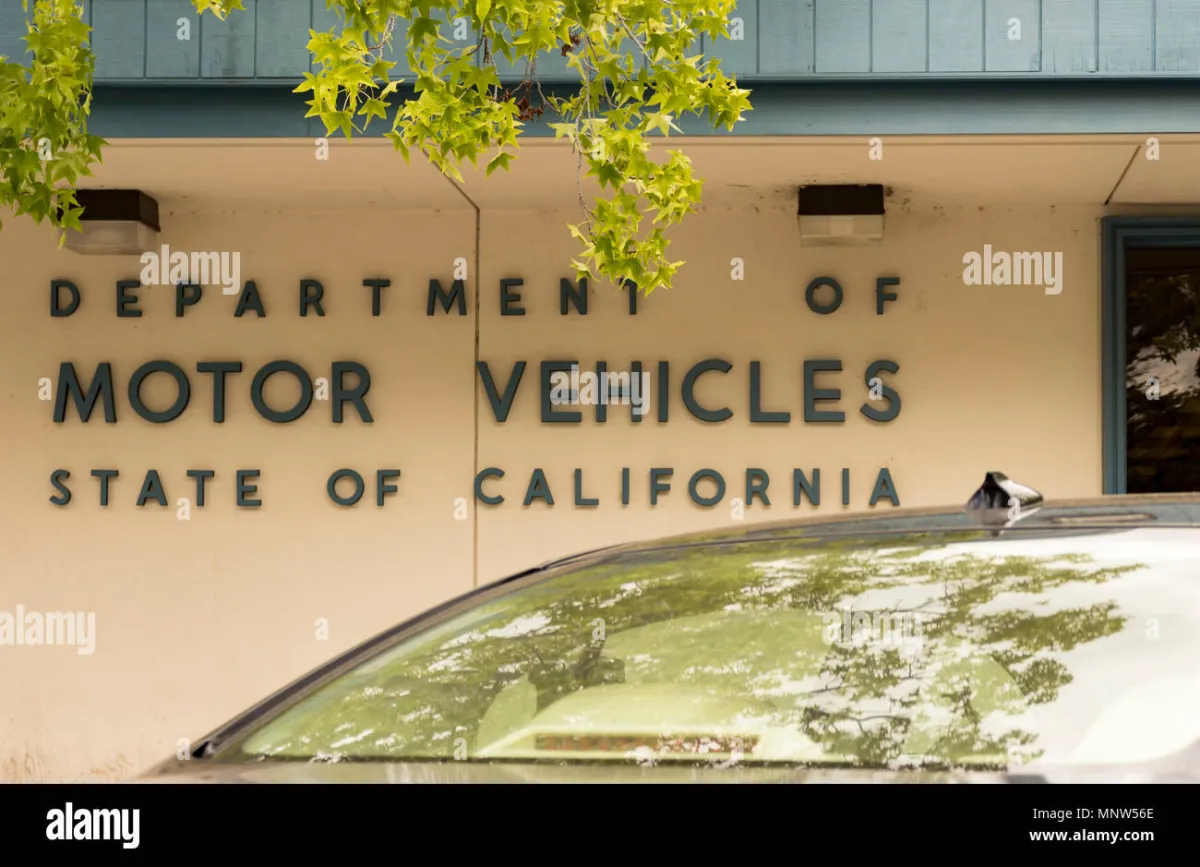 Photo: Department of Motor Vehicles, via c8.alamy.com
If you were born after 1990, you probably can't imagine what this was like. Today, you renew your registration online in three minutes while waiting for your morning coffee to brew. Back then, it was an all-day commitment that required the strategic planning of a military operation.
The 5 AM Strategy Session
Smart families knew the drill. You'd wake up before dawn, grab coffee and snacks like you were heading to the airport, and arrive at the DMV by 6 AM even though they didn't open until 8. Why? Because by 8:15 AM, that line would stretch around the building and into the next zip code.
Parents would take turns holding spots while the other one ran errands or went to work for a few hours. Kids would bring homework, coloring books, and whatever handheld entertainment existed in their era—Game Boys if they were lucky, Mad Libs if they weren't. The DMV waiting room became an accidental daycare center where strangers watched each other's children while parents held their place in line.
 Photo: Game Boy, via m.media-amazon.com
The Forms That Required a PhD
Once you finally made it inside, the real challenge began. The paperwork wasn't just complicated—it was written like a legal document designed to confuse. Every form required three other forms. Every signature needed a witness. Every piece of information had to be written in exactly the right box with exactly the right pen.
Make one mistake? Back to the end of the line.
Forget your insurance card? Come back tomorrow.
Bring the wrong kind of proof of residence? See you next week.
The DMV clerks weren't trying to be difficult—they were just following rules written in an era when bureaucracy moved at the speed of typewriters and carbon paper. Every transaction required multiple signatures, stamps, and approvals that moved through the system like molasses.
When "Quick Errands" Didn't Exist
Families had to plan DMV trips like vacations. Parents would take entire days off work. Kids would miss school. The economic impact was staggering when you add it all up—millions of Americans losing productive hours to stand in lines that moved approximately three people per hour.
Some DMV offices had number systems, but they were primitive. You'd take a ticket that said "47" and look up at the board to see they were currently serving number "12." Basic math told you that you had roughly four hours to kill, assuming the lunch break didn't shut everything down for an hour.
The Lunch Break That Stopped Time
Oh, the lunch break. At exactly 12:00 PM, half the DMV staff would disappear for an hour, leaving two people to handle a room full of 200 increasingly frustrated customers. The line that was moving slowly would simply stop moving entirely. People would sit in those plastic chairs, staring at fluorescent lights, wondering if this was what purgatory felt like.
The Technology That Changed Everything
Today's DMV experience is so different it might as well be science fiction to someone from 1985. Online renewals handle 80% of transactions that used to require in-person visits. Appointment systems mean you walk in at your scheduled time and walk out 15 minutes later. Digital forms auto-populate your information. Electronic payments process instantly.
The infrastructure that makes this possible—secure databases, payment processing systems, digital verification networks—didn't exist until recently. The DMV wasn't being deliberately inefficient; they were operating with 1960s technology in a world that was rapidly outgrowing it.
What We Gained (And What We Lost)
The efficiency gains are obvious and enormous. Americans collectively save millions of hours per year that used to be lost to government lines. Parents don't have to choose between work and basic civic responsibilities. The economic impact of this time savings is probably measurable in GDP points.
But something subtle was lost too. Those DMV waiting rooms were accidentally democratic spaces where Americans from every background sat together in shared misery. Rich and poor, young and old, everyone was equally powerless against the bureaucracy. There was a strange community that formed in those spaces—people sharing snacks, watching each other's kids, complaining together about the absurdity of it all.
The Invisible Revolution
The transformation of government services represents one of the most dramatic quality-of-life improvements of the past 30 years, yet it's almost invisible because it's defined by what doesn't happen anymore. We don't notice the lines we're not standing in, the forms we're not filling out by hand, the days we're not losing to bureaucracy.
For younger Americans, the idea that routine government interactions once consumed entire days seems as foreign as the idea that you once had to go to the bank to get cash. But for anyone who lived through the transition, the contrast is stark. We went from a world where basic civic participation required enormous time investments to one where most government interactions happen invisibly in the background of our lives.
The DMV still exists, of course. But for most Americans, it's become something you interact with online for two minutes rather than something that eats your Tuesday. And that change—quiet, gradual, and almost invisible—represents one of the most significant improvements in how ordinary people experience their relationship with government.