The Government Building That Swallowed Your Afternoon: When Driver's License Renewal Was an Endurance Test
The Ritual Nobody Misses
If you've renewed your driver's license online in the past few years, you probably knocked it out during a commercial break or while waiting for your coffee to brew. Click a few boxes, upload a photo, pay with a saved card, and you're done before your phone screen dims. But rewind to 1985, and that same task required the kind of strategic planning usually reserved for military operations.
The Department of Motor Vehicles wasn't just a government office—it was a bureaucratic black hole where time moved differently. Stepping through those heavy glass doors meant accepting that your day was no longer your own.
The Preparation Phase
Before you even left home, the real work began. You'd need to gather documents like you were applying for citizenship: birth certificate, Social Security card, proof of residence, and your current license. Miss one piece of paper, and you'd be sent home to start over.
Most people took a half-day off work, because nobody knew how long the process would actually take. The DMV operated on government time, which bore no resemblance to the outside world's schedule. Offices might close at 4:30 PM, but they'd stop serving new customers at 3:45 PM, leaving anyone who arrived at 3:46 PM to try again another day.
The Waiting Game
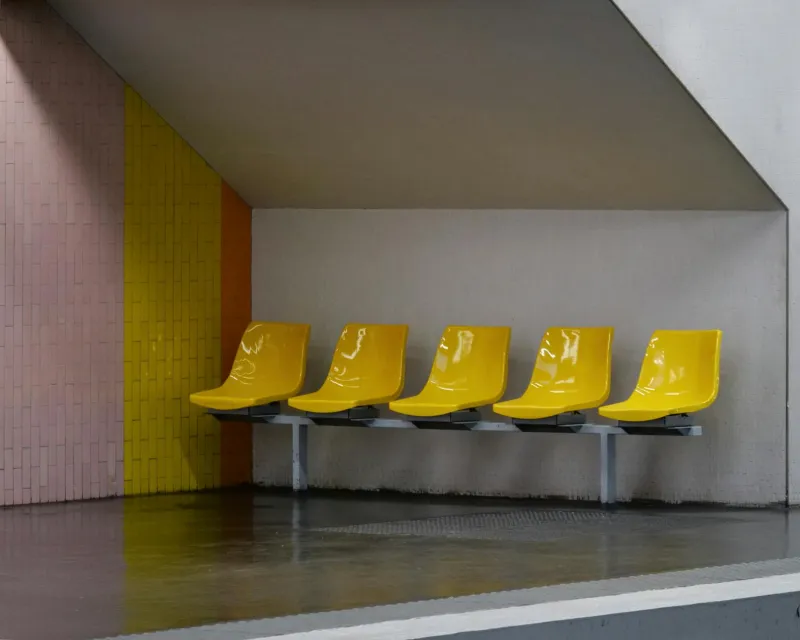
Once inside, you'd pull a number from a mechanical dispenser and join what looked less like a line and more like a refugee camp. Plastic chairs bolted to the floor stretched across fluorescent-lit rooms, filled with people clutching manila folders and checking their watches every thirty seconds.
The electronic boards displaying current numbers moved with the speed of geological formations. Number 47 might be called at 10:15 AM, followed by number 48 at 10:32 AM. If you were holding number 73, you could calculate your approximate wait time using advanced mathematics and a deep understanding of human suffering.
People brought books, newspapers, and snacks. Some brought their entire families, turning license renewal into an inadvertent social gathering. Conversations would spark between strangers united by their shared captivity, creating temporary friendships that lasted exactly as long as it took to reach the counter.
The Paper Trail
When your number finally appeared on the board, you'd approach a counter where a government employee sat behind bulletproof glass, surrounded by rubber stamps and carbon paper forms. Everything was handwritten or typed on manual typewriters that had been in service since the Carter administration.
The clerk would examine your documents with the intensity of a forensic investigator, comparing signatures under magnifying glasses and holding papers up to the light to check for watermarks. One smudged letter on your proof of address could send you back to the end of the line.
If you needed to update information—a new address, a name change after marriage—expect additional forms, more waiting, and possibly a trip to another department entirely. The DMV was organized like a maze designed by someone who actively disliked efficiency.
The Photo Ordeal
The license photo process was equally archaic. You'd sit on a metal stool in front of a camera that looked like it belonged in a 1950s passport office, while a bored employee adjusted your position like you were posing for a mug shot.
"Don't smile," they'd say, as if anyone felt like smiling after three hours of government-sanctioned purgatory. The flash would pop, the Polaroid would develop, and you'd receive a laminated card that would serve as your official identification for the next several years—whether you looked like yourself or like someone recovering from major surgery.
The Modern Miracle
Today's online renewal systems would have seemed impossible to anyone trapped in those DMV waiting rooms. The idea that you could handle official government business from your kitchen table, at midnight, in your pajamas, would have sounded like pure fantasy.
Most states now let you renew online every other cycle, with some allowing multiple consecutive online renewals. The whole process takes less time than it used to take just to find parking at the DMV. You upload your own photo, pay instantly, and receive your new license in the mail within days.
Even when you do need to visit in person, appointment systems eliminate the random wait times. You arrive at your scheduled time, complete your business, and leave—a concept that would have blown the minds of 1980s DMV veterans.
What We Left Behind
The old DMV experience was universally despised, but it did create a shared cultural touchstone. Everyone had horror stories, survival tips, and war wounds from their encounters with government bureaucracy. It was a common enemy that united Americans across all backgrounds.
The inefficiency also forced a kind of patience that modern life rarely requires. You couldn't speed up the process, couldn't complain your way to faster service, couldn't leave a bad Yelp review. You simply had to wait, accept the system's pace, and find ways to cope with institutional indifference.
The Silent Revolution
The transformation happened gradually, then all at once. Online services crept in during the early 2000s, appointment systems followed, and suddenly the DMV went from being America's most dreaded errand to something you could handle during a TV commercial.
Younger Americans who've never experienced the old system can't quite grasp what the fuss was about. To them, renewing a license online feels as natural as ordering food delivery or streaming a movie. They've inherited a world where government services actually serve, where bureaucracy bends to convenience rather than the other way around.
The next time you renew your license with a few taps on your phone, spare a thought for the generations who surrendered entire afternoons to fluorescent-lit government buildings, clutching numbered tickets and praying their paperwork was in order. They fought the DMV wars so you wouldn't have to.