Friday Night at Blockbuster: When Choosing a Movie Was Half the Entertainment
The Weekend Pilgrimage
Friday evening, 7 PM. Families across America would pile into cars and minivans for a ritual that defined weekend entertainment: the trip to the video store. Blockbuster's blue and yellow signs beckoned from strip malls and shopping centers, promising two hours of escape in exchange for $3.99 and the solemn vow to return the tape by Sunday at midnight.
This wasn't just about renting a movie—it was a social expedition that required negotiation skills, backup plans, and the acceptance that your first choice probably wouldn't be available.
The Art of the Browse
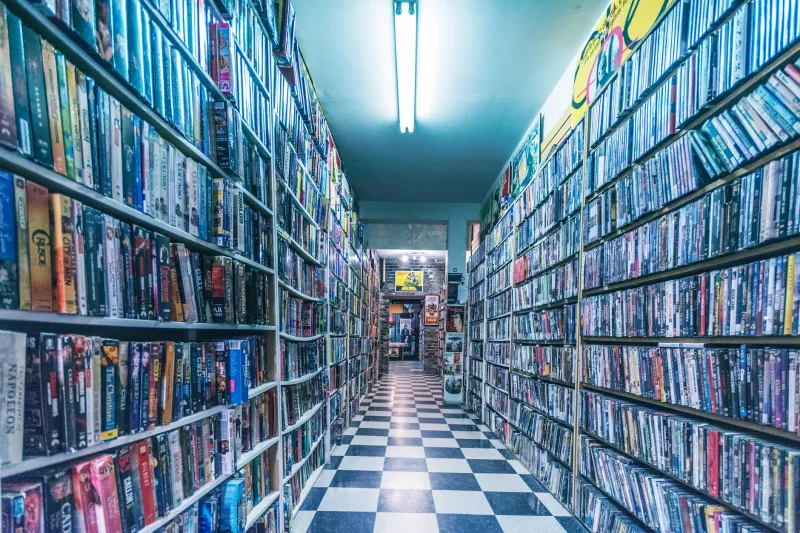
Walking into a video store felt like entering a library of possibilities. Thousands of VHS tapes and later DVDs lined the walls in neat rows, organized by genre and alphabetized with the precision of a military operation. New releases occupied prime real estate at the front of the store, while older titles stretched back into corners where hidden gems waited to be discovered.
Browsing was a physical activity. You'd walk the aisles, tilting your head to read spine labels, pulling boxes from shelves to examine the back cover synopsis and cast photos. The tactile experience of handling each movie case, reading the plot summary, checking the rating—this was how you made decisions in the analog age.
Families would split up to cover more ground. Kids would gravitate toward the Disney section while parents debated between action and comedy. Couples would engage in complex negotiations: "We watched what you wanted last week, so this time..." The store became an arena for domestic diplomacy.
The Disappointment Economy
Nothing prepared you for the crushing disappointment of finding an empty shelf where your desired movie should have been. That new release everyone was talking about? Gone. The classic you'd been meaning to show your kids? Checked out until Tuesday. The video store operated on scarcity—there were only so many copies of each title, and popular movies disappeared fast.
This scarcity created its own social dynamics. You'd develop relationships with store clerks who might hold a copy behind the counter or call you when something came back in. Regular customers learned to visit on Tuesday mornings when new releases were restocked, or to have three backup choices ready.
Some stores let you reserve movies, but that required planning ahead—a concept that feels almost quaint in our instant-gratification world. You had to think about what you might want to watch three days from now and commit to it.
The Impulse Discovery Engine
Without algorithms suggesting "movies like this," discovery happened through serendipity and human curation. Store employees would put up handwritten "Staff Picks" recommendations, introducing customers to films they'd never heard of. You might go in looking for the latest blockbuster and leave with an obscure foreign film because the cover art caught your eye.
The physical layout encouraged browsing in ways that modern streaming never quite replicated. You'd find yourself in the horror section even though you came for comedy, or discover a documentary while looking for action movies. The random walk through genres led to viewing choices that pure search algorithms might never suggest.
Kids would spend ages in the video game rental section, comparing screenshots on the back of cartridge boxes and trying to convince parents that this particular game was essential for their development.
The High-Stakes Return
Renting a movie came with genuine consequences. Return it late, and you'd face fees that could cost more than the original rental. Some people developed elaborate systems to avoid late charges: setting multiple alarms, writing reminder notes, or designating one family member as the official tape-return person.
The "Be Kind, Please Rewind" stickers on VHS tapes represented a social contract. Failing to rewind meant the next customer would have to wait through credits and previews to get back to the beginning. It was a small courtesy that connected strangers through shared media.
Damaged tapes could result in replacement fees that made you question whether you really needed to watch anything ever again. The anxiety was real: Did that weird sound during playback mean you'd broken something expensive?
The Communal Experience
Video stores were neighborhood gathering places where you'd run into friends, neighbors, and coworkers. Seeing someone in the horror section told you something about them. Bumping into your boss in the romantic comedy aisle created a moment of mutual acknowledgment that you both had lives outside the office.
Store clerks became cultural gatekeepers, offering recommendations and engaging in passionate debates about movies. These weren't algorithms—they were real people with opinions, biases, and enthusiasm for cinema. A good video store employee could change your taste in movies forever.
The shared experience of browsing created conversations. Strangers would ask your opinion about a movie you were holding, or offer their own review of something you were considering. The store became a forum for immediate movie reviews and recommendations.
The Streaming Revolution
Netflix started as a DVD-by-mail service that eliminated late fees but maintained the anticipation factor—you still had to wait for movies to arrive. When streaming launched, it seemed almost too good to be true: thousands of movies available instantly, no driving, no fees, no disappointment over availability.
Today, you can browse Netflix's entire catalog in the time it used to take just to find a parking spot at Blockbuster. The selection is vast, the access is immediate, and you can start watching within seconds of deciding what you want to see.
But something was lost in translation. The algorithm knows what you've watched before and suggests similar content, creating a kind of echo chamber that the random browsing of video stores never allowed. You're less likely to stumble across something completely outside your usual preferences.
The Social Cost of Convenience
Streaming eliminated the friction of movie selection, but it also removed the social element. Families no longer need to negotiate and compromise—everyone can watch different things on different devices. The communal decision-making process that happened in video store aisles has largely disappeared.
The paradox of choice has replaced the scarcity economy. Instead of being disappointed that your first choice isn't available, you're overwhelmed by having too many options. People spend more time browsing Netflix menus than they used to spend in entire video stores.
The human curation that made video stores special—the passionate clerk who introduced you to foreign films, the local owner who stocked cult classics—has been replaced by data-driven recommendations that feel both more accurate and somehow less personal.
The Lost Art of Commitment
When renting a movie cost money and required effort, you were committed to watching it. You'd stick with a film even if it started slowly, because you'd invested time and money in the choice. Today's instant access makes it easier to give up on movies within the first ten minutes.
The video store experience taught patience and compromise. Families learned to find common ground, to give unfamiliar genres a chance, to make collective decisions that satisfied everyone reasonably well. These were valuable social skills that streaming's individualized experience doesn't require.
What We Remember
Ask anyone who lived through the video store era, and they'll have stories: the movie that changed their life because a store clerk recommended it, the family arguments over what to rent, the panic of realizing you had to return something in twenty minutes or face a late fee.
These weren't just inconveniences—they were the texture of shared cultural experience. The video store was where America went to argue about movies, discover new favorites, and participate in a ritual that connected entertainment to community.
Streaming gave us convenience, selection, and instant gratification. But it also gave us isolation, algorithm bubbles, and the peculiar modern problem of having everything available and somehow nothing to watch. Progress isn't always a straight line toward better—sometimes it's a trade-off between different kinds of good.