The Appliance Graveyard: When Your Washing Machine Died and Stayed Dead for Months
Your grandmother's washing machine lasted 30 years. When it finally broke, she waited six weeks for a repair.
Today, that seems impossible. We live in an era where a malfunctioning dishwasher triggers an immediate Google search, followed by a YouTube tutorial, followed by Amazon Prime delivery of replacement parts. If all else fails, we can have a technician at our door within 48 hours, armed with diagnostic equipment that would make 1970s NASA engineers jealous.
But for most of American history, appliance failure was a domestic catastrophe that could drag on for months.
The Mysterious World of the Appliance Repairman
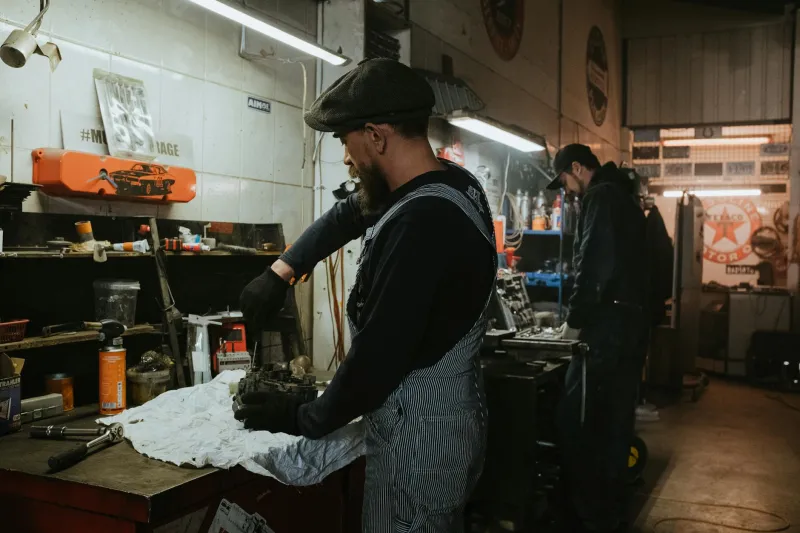
In 1965, when your Kenmore refrigerator started making that ominous grinding noise, you had exactly one option: call Joe's Appliance Repair. Joe was probably the only guy within 50 miles who understood the inner workings of your particular model, and he carried his expertise entirely in his head.
There was no internet database of common problems. No manufacturer hotline with troubleshooting scripts. No diagnostic apps that could identify the issue by listening to the sound your machine was making. Joe would show up at your house with a toolbox, a handwritten notebook filled with cryptic part numbers, and decades of experience fixing things that weren't designed to be fixed.
The repair process was pure detective work. Joe would poke around inside your appliance, muttering to himself about worn belts and burnt-out motors. Sometimes he'd recognize the problem immediately. Other times, he'd need to order a part and come back in two weeks—if the part existed at all.
When Parts Were Precious Commodities
Here's what really separated the old world from today: replacement parts were genuinely scarce. Your local repair shop didn't stock components for every appliance model sold in the past decade. Instead, they maintained relationships with a network of parts suppliers who operated out of dusty warehouses in industrial districts.
When Joe needed a specific motor for your 1962 Whirlpool washer, he'd flip through a thick catalog filled with hand-drawn diagrams and part numbers that looked like military codes. He'd call his supplier, describe what he needed, and hope they had one gathering dust on a shelf somewhere in Ohio.
If they didn't have the part, Joe would start calling other suppliers. Then other repair shops in neighboring towns. Sometimes he'd find someone willing to cannibalize a similar model for the component you needed. Other times, he'd simply tell you that your appliance had reached the end of its serviceable life.
This wasn't planned obsolescence—it was just reality. Manufacturing was less standardized, parts weren't designed for easy replacement, and the entire supply chain operated on personal relationships rather than computerized inventory systems.
Life in Limbo
While Joe searched for your replacement part, your household adapted to appliance-free living. A broken washing machine meant weekly trips to the laundromat, quarters saved in coffee cans, and laundry day becoming an all-day expedition. A dead refrigerator meant daily grocery shopping, coolers filled with ice, and a constant worry about food spoilage.
Families developed elaborate workarounds. They'd borrow appliances from neighbors, share washing machines across extended family networks, or simply do without until the repair was complete. The inconvenience was accepted as part of life—appliances were expensive investments that you fixed rather than replaced.
The Knowledge Gap
Perhaps most remarkably, homeowners were completely locked out of the repair process. Today, a quick YouTube search reveals detailed disassembly videos for virtually any appliance ever made. Online forums connect homeowners with experienced DIY repair enthusiasts. Manufacturer websites provide troubleshooting guides and exploded diagrams showing exactly how every component fits together.
In 1970, none of this existed. Appliance repair was a trade skill passed down through apprenticeships. Manufacturers guarded their technical information closely, sharing it only with authorized service centers. The average homeowner had no way to diagnose problems, identify parts, or attempt repairs beyond basic maintenance.
This knowledge gap made every repair a leap of faith. You trusted Joe to diagnose the problem correctly, order the right part, and install it properly. If he got it wrong, you'd wait another few weeks for him to try again.
The Modern Miracle
Today's appliance repair ecosystem would seem miraculous to someone from 1965. When your dishwasher starts acting up, you can immediately access diagnostic information online. You can order replacement parts that arrive within days. You can watch step-by-step repair videos created by experts and enthusiasts around the world.
If you prefer professional help, you can book a service appointment through an app, read reviews of local technicians, and track their arrival in real-time. The technician arrives with computerized diagnostic equipment and a van stocked with common replacement parts.
The entire process—from initial problem to complete repair—rarely takes more than a week. What once required weeks of waiting and hoping has become a minor inconvenience.
What We Lost and Gained
The old system wasn't entirely bad. Appliances were built to last decades rather than years. Local repair shops fostered community relationships and provided steady employment for skilled tradespeople. The scarcity of replacement parts encouraged people to maintain their appliances carefully and appreciate what they had.
But the convenience of modern repair culture is undeniable. We've traded the neighborhood appliance whisperer for a global network of information and parts suppliers. The result is faster repairs, lower costs, and the luxury of taking our domestic machinery for granted.
Your grandmother's washing machine may have lasted 30 years, but when it finally broke, it stayed broken until someone with the right knowledge, the right parts, and the right timing could bring it back to life. Today, we expect our appliances to work perfectly—and when they don't, we expect them fixed immediately.
It's a small revolution that happened so gradually, we barely noticed it was occurring.